

Everywhere you turn in the infrastructure world, one message is clear: the power demand from AI data centers is surging, and the grid isn’t ready for it. Headlines reflect it. Executives echo it. Utilities are racing to keep up. But what’s missing from the conversation is not the acknowledgment of the problem. It’s the urgency to act.
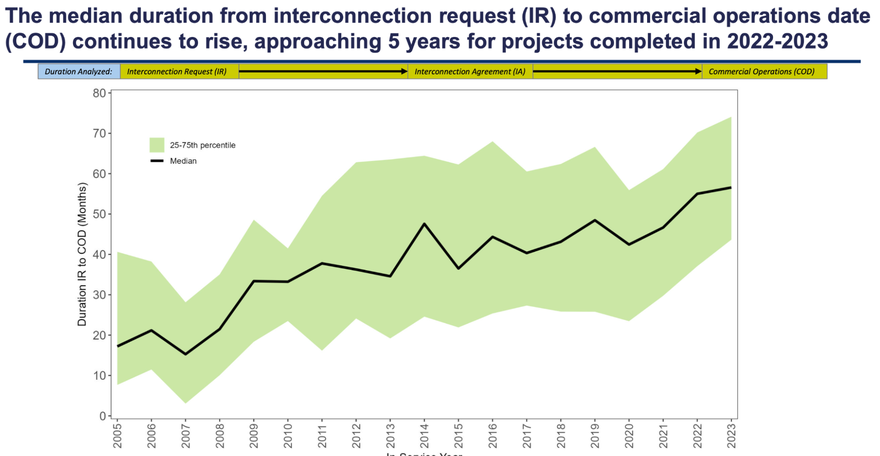
We know the grid is backed up with interconnection applications and burdened by permitting delays. According to Lawrence Berkeley National Laboratory (LBNL)’s April 2024 study, Queued Up, it now takes almost five years from interconnection request to commercial operations for a new power plant to interconnect with the grid.
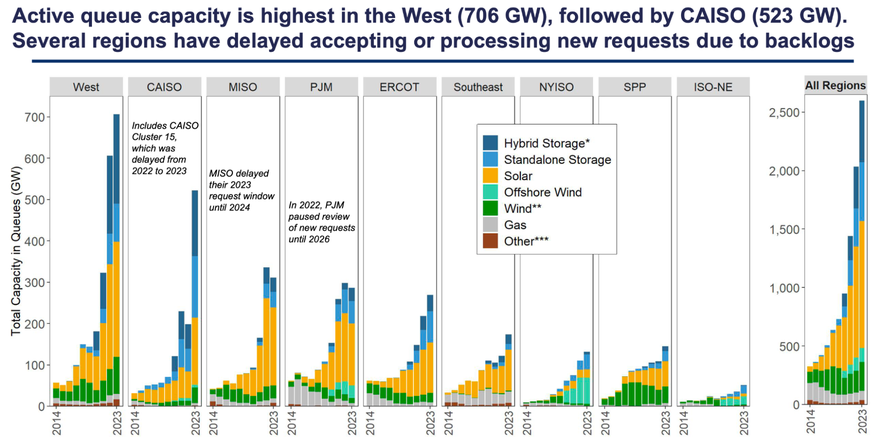
Meanwhile, applications are piling up at an unprecedented rate, mostly from the kind of clean power generation we want, such as solar, wind, and storage.
The global race for power is fierce. If the United States doesn’t produce and connect to enough power supply, it risks losing to China in AI, EV infrastructure, and robotics-enabled automation and manufacturing.
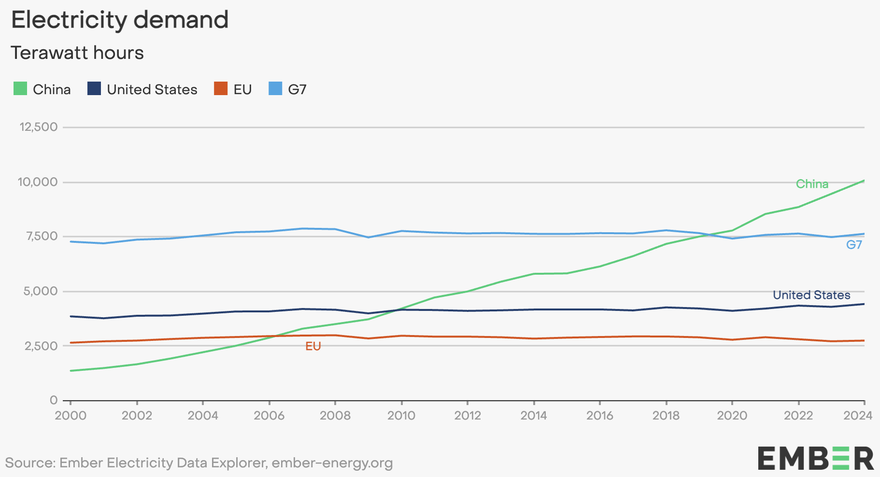
The gap between available power supply and demand from AI compute and other large loads is widening. But this isn’t a future concern, it’s a present constraint. Data center operators aren’t talking about 2028. They need power today.
Let’s bridge the power gap
We need to embrace solutions that can be deployed now, not as permanent replacements for the grid, but as fast, scalable bridges. Modular, off-grid power systems, especially those designed for efficiency and rapid deployment, can give us breathing room. They can support dense GPU loads, power AI clusters, and buy the time utilities need to build the long-term infrastructure we all want.
This situation may feel unprecedented, but it’s not. We’ve faced similar turning points in American history, moments when technological ambition exceeded our physical infrastructure. One of the clearest parallels is the Space Race.
In the late 1950s and 1960s, the US found itself behind. The launch of Sputnik shocked the public, exposed gaps in our scientific and military readiness, and kicked off a national sprint to build. We didn’t wait for perfect systems to be in place; we moved fast.
The government launched NASA, invested massively in engineering talent, funded research institutions, prioritized urgency over bureaucracy, and within a decade, had landed a man on the moon.
That effort created decades of downstream innovation in computing, materials science, and aerospace. It also established America’s position as a global technology leader. And it happened because we treated infrastructure as strategic.
We’re at a similar crossroads today. Only this time, the race is for digital dominance. AI will define everything from national security to economic productivity to scientific discovery. But AI doesn’t run on ambition alone. It runs on electricity — massive amounts of it.
The risk of standing still
If US data centers don’t get the power they need now, the consequences will ripple far beyond missed construction deadlines. We risk:
- Delays and cancellations of critical AI and cloud infrastructure projects
- Revenue losses for cloud providers that can’t meet customer demand
- Stalled innovation, especially for startups dependent on available compute
- Increased reliance on diesel generation, undermining emissions goals
- Offshoring of data center investment to regions with faster permitting and looser environmental oversight
- Strategic vulnerability as other nations capitalize on our infrastructure lag
This is not a distant threat. We are already seeing large tech companies pause or relocate projects due to insufficient local power availability. Even regions that have long been data center strongholds, like Northern Virginia and Santa Clara County, are reaching critical capacity thresholds. Projects are queued behind multi-year utility studies and transmission upgrades, while the demand curve climbs vertically.
What a parallel track looks like
No one is suggesting we abandon long-term grid investments. Clean baseload generation, new transmission corridors, and more agile utility interconnection processes are all essential. But those efforts will take years, and AI isn’t waiting.
In the meantime, we need a parallel track.
According to 2024 EIA data, electricity grids in the US are still powered by approximately 39 percent natural gas and 17 percent coal. That means 56 percent of our electricity still comes from fossil fuels. By building off-grid power systems with a cleaner mix, with the majority coming from solar, wind, and storage combined, we can significantly reduce emissions. For a 300MW data center, this shift could prevent about 1,000+ metric tons of CO₂ each day and would be significantly cleaner than connecting to the traditional grid.
Putting 1,000 metric tons of CO₂ into perspective…
- That’s like taking 2,200 gas-powered cars off the road, assuming they’re driving all day
- Or eliminating 270 round-trip flights from New York to London
- On the absorption side, that same amount of CO₂ in just one day is what 10,000 trees can absorb over an entire year
A track like this could include modular, off-grid power systems that can be deployed quickly and scaled as needed to serve dedicated onsite loads. These systems, built with proven technologies like solar, natural gas turbines, DC-to-DC converters, and battery storage, offer efficient and reliable alternatives that can be brought online in months, not years. This is the bridge we need.
The energy sector already uses similar temporary or supplemental systems during peak loads or in remote industrial settings. Applying this same approach to AI infrastructure is simply adapting a known solution to a new urgency.
Importantly, these systems can be built to meet high efficiency standards. Advanced DC-based architectures minimize conversion loss, reduce heat, and improve uptime — all critical factors for powering dense AI workloads.
We should treat data center power as a matter of strategic importance, with public-private partnerships, clear permitting pathways, and investment incentives that reflect the scale of the opportunity. That includes integrating interim energy solutions into national planning frameworks, not as exceptions, but as essential components of a multi-speed energy strategy.
Because this isn’t just about keeping servers online. It’s about keeping America competitive.





Comments