

If you are a LinkedIn user, you will have likely seen the tsunami of AI-generated action figures flood your feed a couple of months back.
I won’t lie, the novelty amused me initially, but this wore off rather quickly as seemingly every third post became another plasticised version of one of my connections. The popularity of social media trends rises and falls like the tide, but it struck me quite how proliferative this particular one was.
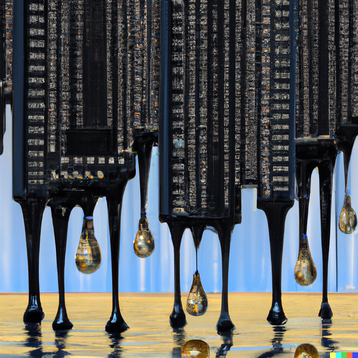
Generative AI is doing some very cool stuff with images and video these days which, thanks to tools like Midjourney and DALL-E 3, have made the creation of high-quality, ultra-realistic content highly accessible, with often whimsical results. I've played with these tools and the output can be truly amazing, so it's no wonder we're seeing more and more AI-generated imagery on social media. I'm personally not surprised the action figure trend has taken off, given that it creates hyper-personalized content by making the user the subject, like some sort of new-age Snapchat filter.
But, like many filters, they appear to be distracting from the reality of what is going on behind the scenes.
It is no secret that AI is resource-hungry. A well-publicised study from the University of California, Riverside claims that generating a 100-word email with ChatGPT consumes 519ml of water, and 0.14 kWh of electricity. I found very little information to compare the resource use for image generation, but it’s clear that these would be much, much higher due to the greater compute demands.
Coming back to my LinkedIn feed, amongst the numerous AI-action people, I also saw a smattering of critics questioning the water and power usage of this trend, and thus abstaining. Of course, some of these comments had a tone of NIMBYISM, but juxtaposed with the numerous AI-generated figures, many of which were posted by data center and technology professionals, it struck me of the potential threat hype-trends could pose in the era of AI.
Whilst individually AI-generated action figures have a small impact - a drop in the ocean you could say - trends like this exemplify how easy it is to use AI en masse, and collectively create an ocean of demand. Seeing the number of individuals, even those with knowledge of AI’s lofty resource consumption, partaking in the creation of these avatars, makes me wonder if we need greater awareness of the collective impact of GenAI.
Now, I want to take a moment to clarify this is not a criticism of those producing AI-generated content, or of anyone who has taken part in the ‘action figure’ trend. I’ve certainly had many goes with DALL-E for fun, and taken part in various trends in my time, but the volume of these recent images caught my attention. Many of the conversations I had at Connect New York a few weeks ago addressed sustainability and the need for industry collaboration, but perhaps we should also be instilling more awareness from an end-user point of view. After all, ChatGPT, according to the Washington Post, consumes 39.8 million kWh per day.
I’d be fascinated to see the full picture of power and water consumption from the AI-generated action figures. Whilst it will only account for a tiny fraction of overall demand, these drops can have a tendency to accumulate. I’d wager we’ll see more AI-generated images trend on social media in the near future.
As generative AI continues to evolve and becomes increasingly woven into everyday life, perhaps we also need to act as more conscious consumers. In small acts of stewardship, those of us working in the technology space, particularly those who advocate for greener options, should think carefully about taking part in these trends. After all, the digital infrastructure industry builds these tools, maybe they should set the tone for how we should use them too?
It also raises an interesting debate about whether we should think more critically about the importance and taxonomy of workloads, and our personal responsibility in the GenAI story. Not all compute was created equally, and whilst large organisations have more power than an individual, the collective impact of the many can have a positive impact.
Just like how we all have recycling bins in our homes to deal with everyday waste, perhaps we need a mindset shift in our digital consumption, and pause to ask: do I really need to generate this?




Comments