

For decades, America’s tech future seemed anchored to the coasts. But the artificial intelligence (AI) revolution is proving that innovation doesn’t have a zip code. AI and the massive tech infrastructure it requires are no longer confined to Silicon Valley or New York – Texas is now central. Dallas–Fort Worth (DFW) is evidence of this, which has quietly become one of the most dynamic, investment-ready regions for AI development. In fact, North Texas now ranks as the nation’s second-largest data center market (trailing only Northern Virginia and ahead of Silicon Valley).
This isn’t just a quirky statistic – it’s a sign of where the next chapter of American tech leadership is being written. DFW has emerged as a hub not just for flashy software or startups, but for the hard infrastructure, world-class talent, and real-world scale that AI’s future demands.
Here are three reasons why DFW is poised to lead America’s next tech chapter.
Texas is building the backbone, not just the apps
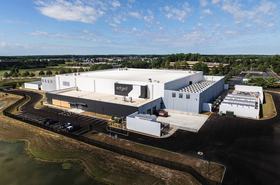
The AI boom isn’t just about algorithms – it’s about compute. Training advanced AI models means housing thousands of power-hungry servers, and that takes land, electricity, and advanced facilities. North Texas is delivering. Just outside Dallas, construction is underway on a new $1 billion “GigaPop” data center campus that will span 800,000 square feet (74,322 sqm) and carry up to 540MW of power - to put that in perspective, one megawatt can power about 200 Texas homes. This single campus is built to electrify the equivalent of a mid-size city, all for cloud and AI computing. And it’s not an outlier, DFW is already one of the country’s fastest-growing data center hubs, with record levels of capacity being added in 2024.
So, why Texas? The Lone Star State offers a rare alignment of advantages ideal for high-density computing. Land is plentiful and affordable, while power is abundant and relatively cheap, and programs like the Texas Data Center Exemption waive sales taxes on the millions of dollars in servers and electrical gear these facilities need. In other words, Texas brings together the ingredients of space, energy, and incentives that the AI era craves.
The talent pipeline is real — and growing
Infrastructure alone doesn’t make an innovation hub – people do. Here too, Dallas–Fort Worth is hitting on all cylinders. The region boasts a formidable pipeline of tech talent trained by its universities and drawn by its opportunities.
At the University of Texas at Dallas — home to one of the largest Computer Science departments in the country — a cutting-edge Artificial Intelligence & Analytics Lab, with the university’s momentum further bolstered by initiatives like the Eugene McDermott Scholars Program, which continues to attract and develop some of the region’s most promising technical and entrepreneurial talent.
Southern Methodist University is also playing a pivotal role, and even smaller, regional campuses are stepping up – for example, Texas A&M–Commerce has begun funding AI entrepreneurship programs to seed innovation in the community. All this amounts to momentum (and homegrown support) behind AI that few regions outside the coasts can match.
Crucially, DFW is retaining its tech graduates, in part because affordability and career prospects in the state make it a no-brainer to stay.
Combining innovation with operational discipline
The final ingredient in DFW’s rise as an AI hub is less tangible but equally important: culture.
Silicon Valley might have a reputation for moonshot thinking and “move fast and break things” disruption, but DFW, by contrast, has built its success on innovation and discipline.
This ethos comes from the region’s unique industrial DNA. North Texas isn’t a one-industry town – it’s a place where aerospace giants, telecom networks, energy companies, healthcare institutions, and more have thrived side by side for decades. That diversity has bred a business culture that is both entrepreneurial and pragmatic. Big ideas are welcome – but so is accountability to make sure those ideas actually work in the real world.
Fermi's paradox
A new data center provider without data centers, now worth billions. Make it make sense
In recent years, the region’s venture capital and startup scene has also grown rapidly. DFW is now home to notable, venture-backed companies making significant use of AI, proving that venture dollars and applications have a home here. Now, as AI moves from hype to implementation, these mindsets are a huge advantage. AI infrastructure applications have to be rock-solid, and funding needs to be savvy and mission-driven.
DFW has what the future needs
DFW isn’t just catching up to the coastal tech hubs – it’s crafting the blueprint for what the next great tech region looks like. All the ingredients are here: the right infrastructure, a strong pipeline of local talent, and a business culture that knows how to execute. None of this happened by accident. It’s the result of years of work — and a regional mindset that values steady growth.
And increasingly, companies built here aren’t just scaling — they’re staying. As more firms explore public listings and financial innovations from inside Texas, DFW is positioning itself not only as a builder of technology but as a steward of its future. Now, with the AI era truly dawning, DFW finds itself uniquely prepared to seize the moment.





Comments