

AI has revolutionized numerous aspects of technology and everyday life. However, its impact on data center design is a crucial issue that has emerged over the past year. Recently, Jensen Huang, CEO of Nvidia, mentioned in a presentation that one of the biggest obstacles to AI development is the lack of power availability. This comment highlights a fundamental issue: the scale of data center projects dedicated to AI demands new solutions for data center power.
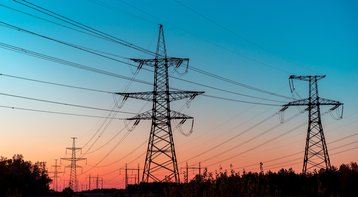
As the scale of AI projects expands, with capacities ranging from 150MW to more than 1GW becoming commonplace, accessing the required power in the traditional way via the transmission grid of each country's operator has become insufficient.
Innovative energy solutions
When we face this type of challenge, we have to take into account the boundary conditions. It’s necessary to analyze the available resources, which may or may not be renewable, and study the acceptance of different technologies depending on the country or region in question.
This will allow us to find the optimal combination of available resources, in order to offer the most resilient and efficient solution from an economic point of view. It is a very broad field with many possibilities and the hybridization of selected technologies requires complex analysis. We can list below the range of technologies under consideration:

- Photovoltaic plants
- Wind energy
- Storage with batteries
- Storage with reverse pumping
- Gas generation plants
- Combined cycle plants
- Hydrogen
In addition to this analysis, we have to take into account the required resilience and ensure that, in instances of failure, there is another backup source. It is a really exciting job that takes us out of our comfort zone.
Project scale
The scale of AI projects starts from a base of approximately 150MW and goes up to 1.5GW per location. This scale imposes a compelling need to rethink the traditional solutions employed so far.
It does not seem to make much sense to approach a 1GW project with a backup solution using 3000kVA generators, because at the operational and maintenance level it can be hell. It seems more reasonable to talk about 30MW or even 300MW turbines.
But this type of solution is not so obvious, since we have to take into account the power ramp in the initial periods until a base consumption higher than the power of the chosen backup equipment is reached.
Nature of the IT load
Those of us involved in the development of AI factories are discovering circumstances in our day-to-day work that have not been encountered in data center projects to date. The power consumption of Nvidia processors has large variations in milliseconds and can produce problems in the supply, due to alterations in the frequency and durability of the batteries of UPS systems.
In discussions with UPS system manufacturers we discovered that these alterations are different depending on the microprocessor chosen. Do we have to wait to know what IT equipment will be installed to define the ideal solution? For the time being, it seems so.
Analysis of the hybridization of different energy sources and the scale of AI projects reveal a challenging landscape. We venture into uncharted territory, facing problems that traditional data centers have not.
The dynamic power consumption of next-generation processors introduces complexities in provisioning and maintenance, pushing us to innovate beyond conventional methods.
As we continue to navigate these complexities, the potential for new and effective solutions remains within reach, promising a future where innovation thrives in the midst of adversity.
More from Quark
-
Sponsored "We are not satisfied with being sustainable in the data center, we want to be sustainable throughout the energy ecosystem"
In an exclusive interview with DCD, Ricardo Abad, managing director of Quark, shares his vision of going beyond sustainability in the data center
-
Sponsored Towards the circular economy and the off-grid data center
The intrinsic link between energy efficiency and sustainability
-

Sponsored Spain now a key data center hub for Southern Europe - Quark's Ricardo Abad
DCD spoke with Quark’s Ricardo Abad about the growth of the data center market in Spain
Comments