
Pilot Energy has partnered with SN Energy Australia to develop a hybrid solar and battery storage project colocated with a 50MW data center project in Western Australia.
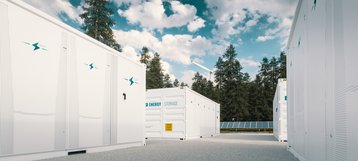
The companies signed a binding heads-of-agreement to develop the project, with SN committing to pay $10.75 million in upfront and milestone payments, plus costs to progress the grid connection and the development applications for both projects. As part of the agreement, SN will fund the acquisition of the land near Three Springs, organically slated for the development of a standalone solar project.
“This is a great result for the company. The joint development agreement with SN Energy enables Pilot to realize a significant amount of capital while delivering a much-enhanced new hybrid project. The hybrid solar BESS project now meets energy market requirements for firm renewable power solutions,” said Brad Lingo, managing director at Pilot.
Details about the data center are sparse beyond its proposed capacity. No timelines for its development have been shared. DCD has reached out to both companies for clarification.
Pilot is an oil and gas exploration and production company based in Australia. It has recently begun to pursue diversification into low-carbon energy systems, including hydrogen and carbon capture and storage.
SN Energy is a globally focused renewable energy platform that focuses on integrating renewable energy with AI data centers and cryptocurrency mining.
Australia is increasingly becoming a hotbed of data center development. In November, advisory firm M3 Property reported that the country’s data center market had expanded 40-fold over the last 20 years, driven by increased interest from hyperscale firms. Earlier this year, Amazon announced a record $20 billion investment in Australia’s data center infrastructure, including the build-out of three new solar farms.
However, Australia suffers from the same data center growth pains that are affecting markets around the world, such as supply constraints, power availability and grid challenges, and high construction costs.
The gap between supply and demand is continuing to grow. According to M3, a supply gap of between 700MW and 1.7GW could emerge by 2028, despite continued increases in live capacity.




Comments