

Verizon announced Tuesday a plan to invest US$100m in solar and fuel-cell energy generation capacity to supplement power requirements at 19 facilities, including data centers, call centers and corporate offices, around the US.
The company expects the project to generate about 70m kWh total annually. Verizon said it will complete the project in 2014.
The move is one of the ways the company is planning to achieve its goal of cutting its overall carbon-emission footprint in half by 2020.
James Gowen, Verizon's chief sustainability officer, said the project was a “natural evolution” of the company's sustainability efforts. “These projects will reduce our carbon footprint, relieve demand on the electrical grid and enhance the resiliency of our proven service continuity – even during outages,” he said.
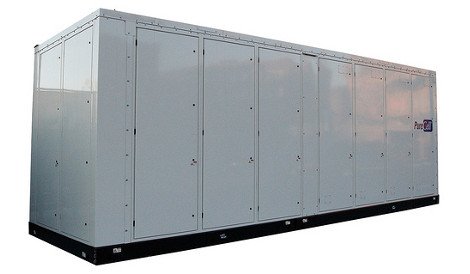
Verizon is getting fuel cells for the project from Hillsboro, Oregon-based ClearEdge Power, which will install its PureCell Model 400 fuel-cell systems at the network and data center services company's California, New Jersey and New York sites. Together, the systems are expected to generate more than 60m kWh per year, which will be ClearEdge's largest single-user project to date.
These will not be Verizon's first fuel-cell deployments. The company has a fuel-cell installation at its call-switching center and office building in Garden City, New York.
Verizon's solar power will come from SunPower Corp., a San Jose, California-based company. The company will deploy rooftop and ground-mounted photovoltaic systems, as well solar parking canopies at Verizon sites in California, Maryland, Massachusetts, New Jersey, Arizona and North Carolina.
The company expects the solar systems to generate about 8m kWh a year. It already has 26 “solar-assisted” cell sites in remote areas in western US.
Neither fuel cells nor solar panels are popular energy sources among data center operators. Only high-profile technology companies have invested in these technologies to supplement their data center power needs.
The most famous example is Apple's newest data center in Maiden, North Carolina. The company has deployed 10MW of Bloom Energy fuel-cell capacity and two 20MW solar arrays to power the site.
Another example is eBay, which has deployed 6MW of Bloom fuel-cells at its Utah data center.
Verizon competitor AT&T has deployed a total of 17.1MW of fuel-cell capacity (also by Bloom) at 28 sites, including some data centers.