
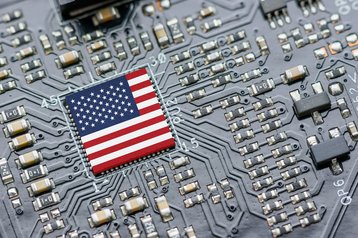
The Trump administration is considering a new plan to reduce semiconductor imports as part of its ongoing efforts to boost domestic semiconductor manufacturing in the US.
According to a report from The Wall Street Journal, the measures would require companies to secure the same volume of domestically produced semiconductors as imported ones, with those that fail to maintain a 1:1 ratio over the long term facing tariffs.
This means that if a company pledged to manufacture one million chips in the US, the company would be credited for that amount, and would be able to import chips until construction of its fab was complete, the report said. It added that the plan could also allow firms to receive relief at the start of the process, as they adjusted to increasing their US manufacturing capacity.
Unnamed sources cited by the WSJ said Commerce Secretary Howard Lutnick has discussed the idea with semiconductor industry executives and had framed the policy as necessary for protecting the economic security of the US.
“America cannot be reliant on foreign imports for the semiconductor products that are essential for our national and economic security,” White House spokesperson Kush Desai told the WSJ. “Unless officially announced by the administration, however, any reporting about our policymaking should be treated as speculative.”
Since the start of his second term, President Trump has repeatedly said his administration would impose tariffs against semiconductor imports. However, despite saying multiple times that tariffs on foreign-made chips would be imposed imminently, Trump has yet to announce any specific levies on semiconductors.
On August 15, he said: "I'll be setting tariffs next week and the week after on steel and on, I would say, chips.” The week prior, he reiterated comments from earlier in the year, stating he plans to impose an approximately 100 percent tariff "on all chips and semiconductors coming into the United States."
At the time, Trump said companies that are building, or planning to build, in the country will be exempt, but the level of investment required to be exempt from the tariffs was not disclosed.



Comments