
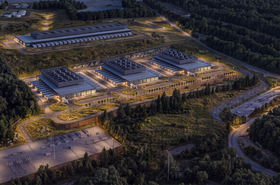
The Vale of White Horse District Council in Abingdon, UK, has launched a heat network feasibility study for several proposed data center developments located adjacent to the Didcot Power Station in Oxfordshire.

A Waste(d) Opportunity: How can the UK utilize data center waste heat?
Heat reuse from data centers remains underutilized in the UK, is that about to change?
According to a filing, the study, which will be undertaken by Nordic Energy, will “consider the potential combination and/or expansion of potential heat network zones identified by the National Zoning Model (NZM), by incorporating opportunities provided by adjacent data center development proposals.”
According to the council, several data center developers have proposed around 400,000 sqm (4.3 million sq ft) of data center projects for the site. The most notable of these is Amazon Web Services (AWS), which acquired the Didcot site from German energy firm RWE in July of last year.
According to the council, the study has several overarching aims. These include reviewing heat network zone development opportunities to help prepare for the introduction of heat network zoning policy, determining whether a heat network is viable for the site, understanding how heat network schemes can be delivered in alignment with the Heat Network Zoning Regulations, setting out a range of possible delivery models for the council, and providing decision-makers with recommendations on what's next.
During the study, the council will seek to assess the technical and economic feasibility of conceptual heat network projects within the local area, identify key heat demand opportunities, key heat sources, and the potential energy center sites that may unlock delivery of heat network zones, set out any timescales, opportunities, and development risks, and finally produce a report to summarise the study’s findings.
The scope of the works includes identifying major heat demands, heat sources, and potential distribution networks, and reviewing potential heat network zones. In addition, the study must provide the council with a “clear and justifiable basis upon which to evaluate the full potential for heat networks in the study area, for both the short and long-term and how these may best be delivered.”
The study is expected to be completed on March 31, 2027.
Data center-supplied district heating systems are growing in popularity worldwide. The largest concentration is in the Nordic countries, where operators have leveraged the region's legacy district heating networks. For example, in Finland, Microsoft has partnered with local utility Fortum to supply waste heat from its first two facilities planned there. When completed, the facilities are expected to provide around 40 percent of the district heating needs of Espoo, Kauniainen, and Kirkkonummi.
In the UK, there have not been as many agreements, due to the lack of legacy infrastructure and incentives for data centers. However, there has been a shift in regulation in recent years, with the Energy Act of 2023 establishing a set of legal foundations for heat network zoning across England.
Last April, it was announced that district heating firm Hemiko was selected by the Old Oak and Park Royal Development Corporation (OPDC), a London Mayoral Development Corporation, to design, develop, and operate a low-carbon heat network that will draw waste heat from local data centers.



Comments