
TSMC has secured 15 customers for its first-generation 2nm (N2) process node technology.
The revelation was made by Ahmad Khan, president of KLA’s semiconductor products and solutions division, during a recent Goldman Sachs event. He went on to say that around ten of those customers were focused on high-performance compute (HPC) designs.
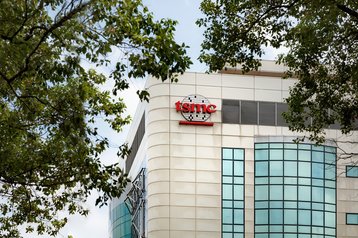
Mass production for TSMC’s 2nm technology is currently slated for H2 2026, with adoption expected in early 2027.
On X, formerly Twitter, analyst Junkan Choi said that it's noteworthy that the majority of TSMC’s 2nm customers are in the HPC space, as traditionally the chipmaker’s new advanced nodes have been primarily adopted by mobile application processor customers such as Apple and Qualcomm.
“However, with the advent of the AI era, demand for implementing high-performance computing has surged,” they wrote. “In other words, if HPC makers in the past felt little need to adopt the most advanced nodes, they are now starting to recognize that necessity and are acting on it.”
Choi also said: “In my view, this serves as a rebuttal to the long-standing argument that has weighed on equipment makers like ASML: namely, that because HPC players don’t use the most advanced nodes, even if TSMC earns money, it won’t translate into demand for cutting-edge equipment.“
In April 2025, AMD said its sixth-generation Epyc processor, codenamed Venice, would be the first HPC CPU to be taped out on TSMC’s 2nm process technology. No details about the Venice chip family have been announced yet, but the CPU is expected to be launched in 2026.
TSMC announced in July it was planning to build at least 15 new fabs “over the next several years,” including 11 new fabrication plants and four advanced packaging facilities in Taiwan. At the time, C.C. Wei, chairman and CEO of TSMC, said this was a result of the company “preparing for multiple phases of 2nm fabs in both Hsinchu and Kaohsiung Science Parks to support the strong structural demand from our customers."
Outside of Taiwan, the chipmaker also has fabs underway in Japan, Germany, and Arizona in the US, with Wei saying that “about 30 percent of our 2nm and more advanced capacity will be located in Arizona, creating an independent leading-edge semiconductor manufacturing cluster in the US.”





Comments