
TSMC has forecast between $52-56 billion in capex spend for 2026 after posting its eighth consecutive quarter of Year-over-Year (YoY) growth for Q4 2025.
The chipmaker reported a 35 percent YoY increase in net profit, hitting $33.73bn for the three-month period – a new record for the company.
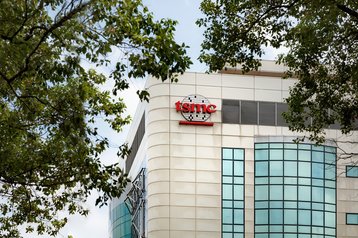
Revenue for the quarter surpassed $32bn, with TSMC executives anticipating revenue of between $34.6bn and $35.8bn for Q1 2026, a four percent Quarter-over-Quarter increase, or up 38 percent YoY. Full-year revenue growth for FY2026 is estimated to be around 30 percent.
“Our business in the fourth quarter was supported by strong demand for our leading-edge process technologies,” said Wendell Huang, senior VP and CFO of TSMC. “Moving into first quarter 2026, we expect our business to be supported by continued strong demand for our leading-edge process technologies.”
Shipments of the company’s 3nm chips accounted for 28 percent of TSMC’s total wafer revenue during the quarter, with 5nm accounting for 35 percent and 7nm for 14 percent. Advanced technologies – which the company defines as 7nm or smaller – contributed to 77 percent of total wafer revenue in Q4, and 74 percent for the full year 2025, up from 69 percent in 2024.
When broken down by platform, high-performance compute accounted for 55 percent of Q4 revenue and 58 percent of annual revenue during 2025, representing growth of four percent QoQ and 48 percent YoY.
Speaking on a call with analysts after the results had been published, Huang said TSMC was facing a number of challenges related to node complexity and increasing manufacturing costs, such as the price of tools.
“As a result, the capex dollar required to build 1,000 wafers per month [at full] capacity of N2 (2nm) is substantially higher than 1,000 wafers per month [at full] capacity for N3 (3nm). The capex per 1,000 cost for A14 (1.4nm) will be even higher. We also face additional cost challenges from the expansion of our global manufacturing footprint, new investments in specialty technologies, and inflationary costs.”
Earlier this week, The Information reported that Nvidia and Broadcom had both requested additional production capacity from the chipmaker, but were both told by TSMC that they could not be offered as much capacity as they wanted.
While TSMC chairman C.C. Wei said on the same earnings call that the company would “remain disciplined in our capacity planning approach,” he claimed that TSMC was speeding up its capacity expansion in Arizona and pulling forward the production schedule at its second fab in the state, with high volume manufacturing now expected for the second half of 2027.
“Construction of our third fab has already started, and we are in the process of applying for permits to begin the construction of our fourth fab and fourth advanced packaging fab. Furthermore, we have just completed the purchase of a second large piece of land nearby to support our current expansion plan and provide more flexibility in response to the very strong multi-year AI-related demand,” he said.
“Our plan will enable TSMC to scale up an independent GIGAFAB cluster in Arizona to support the needs of our leading-edge customers in smartphone, AI, and HPC applications.“
When asked by an analyst if he was concerned that there could be a “bit of a bubble,” Wei said: “You essentially try to ask whether the AI demand is real or not. I'm also very nervous about it. You bet.”
However, Wei went on to say that he spends a lot of time talking to customers and making sure their demands are real, “and I’m quite satisfied with their answer.”
“Can the semiconductor industry be good for three, four, five years in a row? I'll tell you the truth, I don't know. But I look at AI, it looks like it is going to be endless... that's for many years to come. But, no matter what, TSMC will stick to the fundamental technology, leadership, and manufacturing excellence. “



Comments