
TIM Brasil has signed a contract to deliver 5G connectivity to Antarctica.
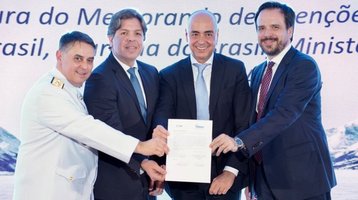
Local media, including Teletime, this week reported that TIM Brasil has signed an agreement with the Ministry of Communications and the Navy to expand the communication capacity of the Comandante Ferraz Antarctic Station.
The 5G network is set to go live from February 2026.
The Brazilian Navy and the National Telecommunications Agency (Anatel) also signed the memorandum.
“The signing of this memorandum between TIM and the Union expresses a common goal for all of us, which is to strengthen scientific research and guarantee connectivity for those who live and work at the base of the Brazilian Antarctic Program," said Frederico de Siqueira Filho, Minister of Communications.
"It marks the meeting of telecommunications with science to expand Brazil's presence in Antarctica and improve the lives of those who spend months away from home serving the country."
TIM Brasil has been providing connectivity to the station since 2023, as part of the Brazilian Antarctic Program. The carrier has been providing connectivity since acquiring Oi Móvel, which previously offered the service.
"Connecting Antarctica with 5G opens up new possibilities for science. Connectivity shortens distances and strengthens professional and human relationships. Now, new technology can enhance this progress. At a time when global debates, such as those at COP30, reinforce the urgency of climate and environmental issues, using technology to support research in Antarctica becomes essential," said Alberto Griselli, CEO of TIM.
According to Brazil's Minister of Communications, TIM's network expands scientific production capacity and offers better conditions for national and international researchers to advance studies essential to the country and the planet.
TIM's 5G mobile network has been activated across 1,000 cities in Brazil, covering 75 percent of the country's urban population.
Chilean mobile operator Entel previously launched 5G in Villa Las Estrellas, Antarctica, at the Presidente Eduardo Frei Montalva base on Jorge Island.
With no subsea cables currently landing in Antarctica, research stations there must rely on satellite communications. Traditionally, connectivity has been provided by aging GEO satellites, but newer high-speed options have become available with the launch of LEO satellites from the likes of SpaceX's Starlink.
In 2022, Australia's Antarctic base gained a connectivity boost in a deal with Speedcast; Starlink has been deployed at the US research station; and Telenor recently installed a new base station at the Norwegian station.






Comments