

Server virtualization has played a major part in business technology for several years. Gartner re-emphasised its importance a few months ago by highlighting the top five virtualization trends for 2012, stating that virtualization is hitting 50% penetration and still growing. But despite the notable advantages server virtualization presents, its rapid growth and development have revealed a number of problems that will block its progression if left unaddressed.
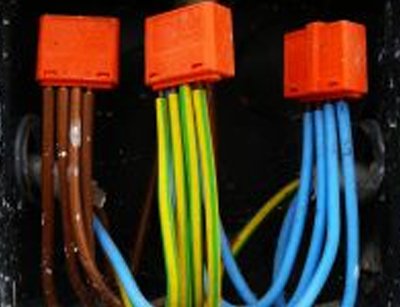
Last year, Gartner noted that “most organizations will be well-served by focusing attention on the challenges within the server rack.” In my experience, a major challenge to expansion of server virtualization is the resulting consumption of hardware. As the number of virtual machines increases, so does the number of cables associated with the increased levels of I/O.
Server virtualization market leader VMware currently boasts about 84% market dominance. It has two solutions for the increased levels of I/O experienced by servers that are working to capacity full time.
The first involves traffic segmentation using a series of 1Gb Ethernet links. This allows the server to physically separate traffic flows and prioritize as appropriate. This approach, however, drives up port, cable and switch count and costs and limits the total number of applications that can economically deploy VMware. It also, by its very nature, increases the complexity of server management.
Traffic QoS
The alternative option VMware offers is to use heavy-duty full 10Gb links alongside its traffic QoS feature. While this method does reduce cable count (as by now your server is resembling Medusa’s head), it can prove expensive as no data center manager wants to be deploying 10Gb connections that will knowingly be underutilized.
Another issue with this method is that physical separation no longer exists in the server environment, and multiple traffic flows are now pushed down the same pipe, causing increased management complexities in a process that would normally be segmented.
So, while infrastructure virtualization is a 21st-century necessity, its very nature creates I/O problems. The question then becomes: How do you optimize what has already been optimized?
What’s the appropriate solution?
The answer lies in the way subsequent data is handled. There are two major lines of thinking about I/O consolidation and where it should take place: in the access or in the network layer. The access layer sees I/O consolidation take place between the server and the network, while network-layer I/O consolidation takes place within the fabric.
While various market forces have proposed network-layer solutions that rely on Ethernet and Fiber Channel over Ethernet (FCoE) to reduce the number of network switches and adapters, it’s a methodology that doesn’t support InfiniBand, SAS, or other host adapters.
That leaves the prudent future-thinking data center manager with access-layer solutions and dedicated top-of-rack devices designed to address the excess I/O.
Let’s think about it logically: I/O has always relied on dedicated PCI Express connections, which have resided inside the server. Up to eight cables per rack are connected to them using multiple switches to pipe data back and forth between the data center and the network.
Directing traffic
Server virtualization increased the traffic and the cables increased in proportion. But what if all the traffic could be directed to just one PCI unit which then segmented and rerouted it virtually? That is a modern-day reality. Instead of multiple 1Gb lines or some major 10Gb Ethernet cables, data center managers can deploy a single PCI Express cable connecting the server to a pool of I/O at the top of the rack.
Now, it’s a little more complicated, and different vendors offer different rack-based solutions, but intrinsically, there you have it – how do you deal with an increase in traffic born from server virtualization? You virtualize the traffic as well. The beauty of this method is that PCI cables are universal and can support a number of different protocols (Ethernet 1Gb or 10Gb, Fiber Channel, InfiniBand, SAS/SATA, FCoE, iSCSI, GPUs, etc) and, better yet, if you need more bandwidth, you can easily upgrade it.
Access-level i/o
The availability of access-level I/O virtualization solutions is relatively unknown, but it’s essential that data center managers consider aspects such as the type of transport used.
Look out for post-installation traffic speeds and adaptor costs (a nasty sting in the tail of any implementation) and protocol adaptability (making sure a solution is compliant with storage protocols such as SATA, for example, if you have an incumbent SAN). These will impact on the time it takes to stand up new servers and the cost savings and efficiencies your business will gain.
As virtualized data center environments are becoming the norm, so too will virtualized I/O as the next part of the efficiency puzzle.
This article first appeared in FOCUS 25. To read our digital editions, click here.