
Samsung Electronics and US mobile carrier Verizon have paired to complete an Integrated Sensing and Communication (ISAC) trial during a soccer fan event in Dallas, Texas.
This trial was carried out over a virtualized network, which aimed to demonstrate how sensing networks can enable real-time intelligence for large-scale events.
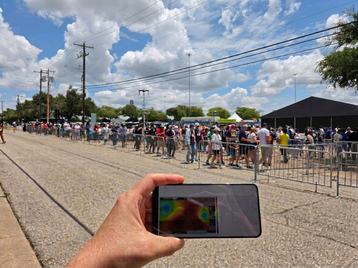
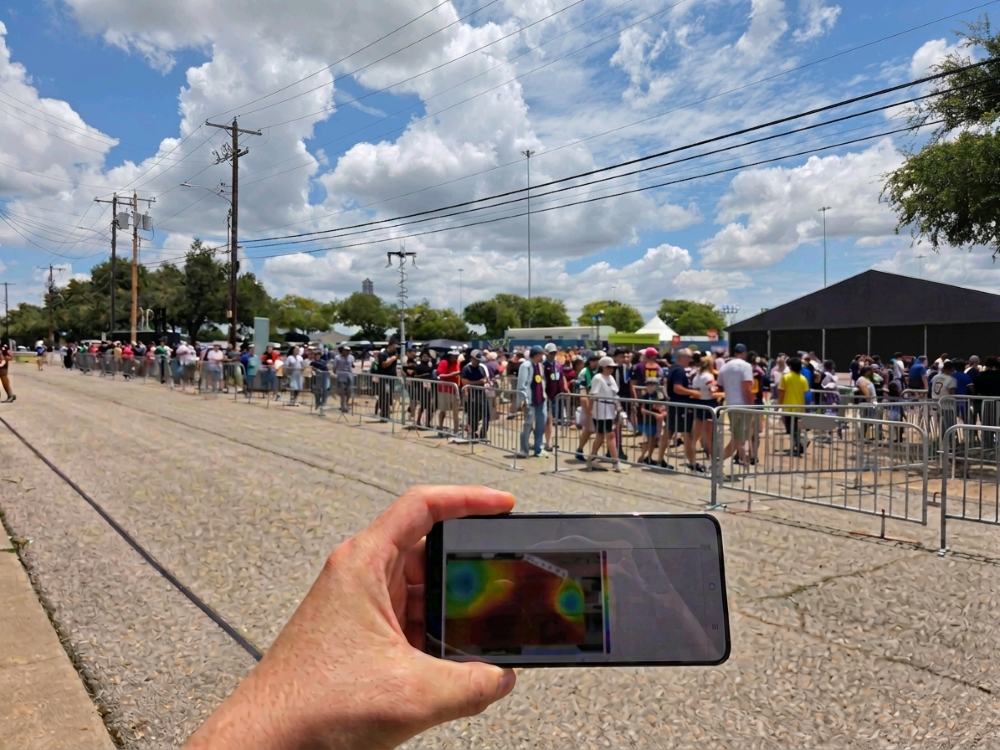
ISAC aims to transform mobile networks from communication systems into spatially aware platforms, merging high-speed communication and environmental sensing into a single unified infrastructure. The technology is tipped to be a key feature of the 6G era.
Samsung claims that the ISAC test is one of the industry’s "first practical implementations of a key technology for 6G," which it said showcases how operators are leveraging software-driven network architectures to "create infrastructure that actively perceives, understands, and responds to their environment."
Specifics around the exact location of the test were not revealed by either Samsung or Verizon, though the two companies said the trial was able to validate ISAC in a live, real-world environment.
Earlier this summer, rival telco AT&T worked with Ericsson, a rival to Samsung, to trial drone detection over a 5G network using sensing technology at AT&T Stadium in Arlington, Texas.
Samsung integrated its commercial AI-powered vRAN and vCore with an ISAC application, deploying them on its Network in a Server (NIS), which is an end-to-end software-driven Edge-AI platform that consolidates all network functions and accelerated compute into a single server. By doing this, the ISAC was able to leverage connectivity from a 5G network without the need for any additional equipment.
In order to capture data, this server was attached to a Verizon Cell-on-Wheels (COW) that used a sensing receiver supporting 40MHz of spectrum in the Consumer Broadband Radio Service (CBRS) band.
This enabled Samsung's NIS to analyze this real-time data, utilizing the accelerated compute to extract actionable insights that are visualized as a crowd density heatmap that changes in near-real time to reflect people’s movements.
“Our early investments in flexible, software-driven vRAN architecture are paying off today, giving us the agility to engineer and trial groundbreaking 6G concepts like ISAC over our existing infrastructure," said Yago Tenorio, chief technology officer and senior vice president of technology development at Verizon.
"This field trial with Samsung proves that the network of the future will do far more than just transfer data — it will actively perceive and interact with its environment to transform venue management and public safety.”
Samsung noted that its ISAC system used wireless signals as a sensing basis to automatically identify crowded areas within the venue.
The vendor touted the system as being able to improve event management, such as providing attendees with insight on what are less congested food stalls to improve waiting times or for event organizers to keep on top of crowd distribution, and even help security personnel detect any emerging risks such as overcrowding.
“This successful ISAC trial underscores how Verizon’s decision to adopt a software-driven, AI-powered vRAN early on laid a solid foundation, positioning the company at the forefront of the 6G journey,” added Ji-Yun Seol, executive vice president and head of product strategy, networks business at Samsung Electronics. “With this approach, forward-thinking operators like Verizon are unlocking untapped potential, spearheading the shift toward a new era where unprecedented services, devices, and use cases converge on next-generation networks.”
The trial comes as Verizon separately announced the expansion of its 6G Innovation Forum, to include Amazon Web Services (AWS), Cisco, Intel, Keysight Technologies, MediaTek, Nvidia, Palo Alto Networks, Rohde & Schwarz, and Viavi Solutions. Samsung is already a founding member of the group.
Verizon's 6G Innovation Forum focuses on unlocking the full potential of 6G by trialing new use cases, spectrum bands, and bandwidth, and ensuring global alignment with global standards bodies like the 3GPP, notes the carrier.




Comments