

Founder of OpenStack Rackspace has come up with a cunning plan devised to accelerate the adoption of OpenStack – and bring in new revenue for the hosting company.
It is offering to implant its OpenStack-based cloud know-how into service provider and telco data centers, at a cost.
Rackspace has powered its cloud using OpenStack’s technologies and principals and said it now wants to further capitalize on this by offering its own technology and support to get OpenStack cloud environments up and running in other facilities.
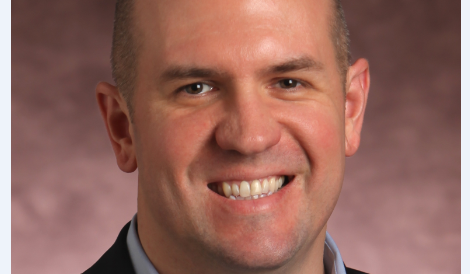
Rackspace CTO John Engates said he believes by broadening the reach of the Rackspace cloud, the company can help advance adoption of OpenStack while also extending its own cloud network.
“We want OpenStack to be in more places and for customers to have more choice for OpenStack cloud,” Engates said.
“From our perspective, this is just like spinning up another Rackspace cloud.
“We won’t invent new tools or create anything new - a lot of the software and automation we use in the Rackspace data center will be used in these third-party data centers.”
The Rackspace offering is targeting the market with cloud technology, including hardware and software infrastructure, infrastructure operations including patching, tuning and monitoring and go-to-market support.
Engates said it also opens up the cloud network for new OpenStack users, allowing service providers and telcos to connect to other Rackspace cloud facilities around the world, which can open up new opportunities for geographical expansion.
He said Rackspace can also use these other cloud environments to extend its own offerings through arranged partnerships.
“For a long time, since I have been at Rackspace - for about 13 years - we have always had interest from other people wanting to get into the hosting business,” Engates said.
“We have had a lot of companies approach us asking them to help them build a cloud and licence technology and for a while, in the cloud era, we haven’t been in a position to do that, as we were always trying to build our own cloud.”
Engates said Rackspace now has a set of stable processes and a solid cloud it can use to help others build its OpenStack-based cloud, while taking on full day-to-day managemenet for third-party cloud maintenance.
“The users [of Rackspace’s OpenStack cloud] will still manage their data center, their network and hardware aspects, so we won’t physically need to be in those facilities, but we will manage the stack, and help them to build their business model around this,” Engates said.
Rackspace is currently talking with some telco providers about getting the first project off the ground, and he said while the offering does promise a much faster roadmap for the Cloud, different organizations will go through the installment process at different speeds.
“Not all data centers will be configured in the first instance to how exactly what we need to do this,” Engates said. “But once th eprocess is down, we will get better at it every time.”
He expects to see most interest come from less mature markets, such as Asia, which is showing a lot of interest in OpenStack but is further behind than the US on cloud adoption.
“China specifically will be a hot area, along with some parts of Europe and quite a number of countries in South America,” Engates said.
To run the service, Engates said Rackspace is not creating any new roles.
“We will not have to put on a lot of technical staff, as we are not rewriting software or retooling anything. It will be more about the integration and we can always tap into third parties that are already working with these customers if we need to do more,” Engates said.
As far as competition goes, Engates said Rackspace is being careful not to work with companies it already competes with today.
“We don’t have plans to go into every country or continent. Even at our best, the biggest service providers out there today are in just a handful of locations around the world, but there is still a lot of demand in many countries where cloud is unavailable,” Engates said.