
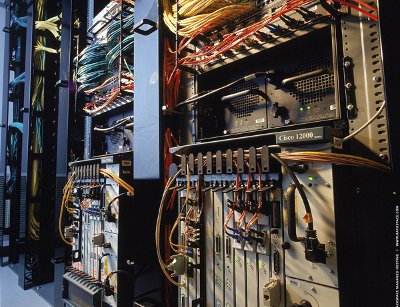

Rackspace sees OpenStack, the open-source cloud architecture and operating system the company has developed together with the US National Aeronautics and Space Administration (NASA), as its ticket to the cloud market’s big leagues, which consists of players like Amazon Web Services (AWS) and VMware.
The company’s CEO Lanham Napier said cloud computing would drive an explosion in new demand for computing. “We are in the position to lead this revolution,” he said during the company’s second-quarter- earnings call Tuesday.
“OpenStack is the enabling technology for Rackspace to become a much larger business,” Napier said, adding that this was a “Once-in-a-lifetime opportunity to join the [group] of companies that are both big and great,” referring to the likes of AWS and VMware.
Rackspace launched its public-cloud services built on OpenStack into production earlier this month, starting with cloud-based database and server offerings.
The decisions it makes and products it releases this year are formative for Rackspace and for the market where IT resources are commodified and consumed as services. The company’s execution in 2012 will influence its competitiveness for years to come, Napier said.
He reported that so far Rackspace had been on track with its 2012 product-release schedule. “We are more than halfway through our product transition schedule for the year.”
The company expects to release more cloud products in the third quarter.
Rackspace has put all of its cloud eggs into the OpenStack basket. “OpenStack is rapidly emerging as the de facto standard for open source technologies in cloud computing,” Napier said.
The architecture has gained a lot of traction in the IT industry, enjoying backing of some of the largest players. Companies like Citrix, Dell, NTT, AMD, Intel, Cisco, Brocade, Bull, NetApp, HP, Equinix, Yahoo!, Red Hat and many others have thrown their weight behind the open-source project.
So how is Rackspace planning to compete with Amazon? Its key differentiators are narrow specialization, openness and customer support, Napier said.
While Amazon is a “generalist”, selling everything from books to cloud services, Rackpace specializes in data center and IT services. Where Amazon’s cloud is built on a proprietary architecture, OpenStack is an open-source project.
Finally, Amazon is “playing a scale game” and “we are playing a service game”, Napier said.
Amazon is not the only company for Rackspace to worry about, however. Google has recently entered the Infrastructure-as-a-Service market and so have Microsoft and HP.
And, like Rackspace, HP built its public cloud on OpenStack.
Rackspace has had an older cloud offering, where many of its customers are currently running applications. Napier said the company would not rush to transition these customers from legacy to Open Cloud.
“You will see us pursue that with rigor but you won’t see us rush,” he said. In this transition, it is paramount to make sure there is maximum benefit in it for the customers and there is little-to-no interruption to their services.
As far as adoption patterns go, Napier expects small and medium-size businesses to become early adopters of the open-source cloud, being naturally bigger risk takers, while enterprises will wait for performance metrics to become available before they make the transition.