
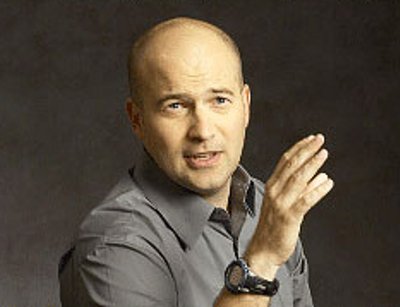

Rackspace, a major US cloud infrastructure services provider, announced Monday that its CEO Lanham Napier would retire. He will be temporarily replaced by Graham Weston, a co-founder and executive chairman of the company's board of directors who was its CEO for seven years before Napier took the role.
The company did not explain the reasons behind the decision, saying only that Napier planned to invest in and advise other “entrepreneurial” companies. He plans to continue consulting Rackspace over the course of the transition, which is expected to take several months.
“It has been a privilege to be part of Rackspace for the past fourteen years,” he said in a prepared statement. “I have enjoyed working with Rackers and our customers to bring fanatical support to the fast-growing market of cloud computing.
“My decision to step down as CEO was a difficult one, but it’s the right choice for me and for the company.”
The company is at a “natural transition point” for changing leaders and stepping into the next phase of growth, he added. “I look forward to following Rackspace’s success as I return to my entrepreneurial roots – to build new things and invest in disruptive ideas.”
James Bishkin, lead director on the company's board, praised Napier's achievements during his time as CEO. “Under Lanham’s leadership, Rackspace grew from a small startup to a global $1.5bn public company, serving more than 200,000 customers and has been one of the fastest-growing firms on the New York Stock Exchange,” he said.
The company has kicked off the search for a permanent replacement and hired an executive recruiting firm for help. The search will include candidates both inside and outside of the company.
Over the past several years San Antonio, Texas-based Rackspace has changed itself from a hosting company to one of the biggest Infrastructure-as-a-Service providers in the US.
The company has also been a major force of technological change in the industry.
Some of its engineers were part of the original group that created OpenStack, the open source cloud operating system that has gained strong momentum over the past several years. OpenStack is what orchestrates the infrastructure that supports Rackspace's own cloud services today.
The company has also been innovative with hardware. It was one of the first service providers to use hardware designed to the specs of the Open Compute Project, an open source hardware and data center design community spearheaded by Facebook.
Rackspace reported its fourth-quarter and full-year 2013 financial results Monday. Its Q4 revenue was US$408m – up 16% year over year – and net income was $21m, which is a 30% drop from profits the company reported for Q4 2012.
Full-year 2013 revenue was $1.5bn – up from $1.3bn reported for 2012. Profit for the year was $86.7m – down from $105.4m in 2012.
The company spent $65m on hardware purchases and $23m on data center build-outs during the quarter. Its server count went from about 102,000 at the end of Q3 to about 104,000 at the end of Q4.