
Australian quantum computing company PsiQuantum has raised $1 billion in a Series E funding round that saw participation from Nvidia’s venture capital arm, NVentures.
As a result of the raise, PsiQuantum has been valued at $7bn.
The round was led by funds and accounts managed by affiliates of BlackRock, along with Temasek and Baillie Gifford, and also saw participation from a number of other new investors, including Macquarie Capital, Qatar Investment Authority (QIA), Type One Ventures, Counterpoint Global (Morgan Stanley), and S Ventures (SentinelOne).
The investment in PsiQuantum marks the third time NVentures has publicly participated in funding rounds for quantum computing firms, having also announced investments in Quantinuum and QuEra in recent weeks.
Both investments mark a contrast to comments about quantum previously made by Nvidia’s CEO Jensen Huang at CES earlier this year, when he said useful quantum computers were between 15 and 30 years away, adding, “If you picked 20 [years], I think a whole bunch of us would believe it.”
He later backtracked on those comments, taking to the stage with a number of quantum computing executives during Nvidia’s Quantum Day in March and telling the audience he was “wrong.”
In addition to the financial support from Nvidia, PsiQuantum announced it would also be collaborating with the chip giant across a “broad range of development areas,” including quantum algorithms and software, GPU-QPU integration, and PsiQuantum’s silicon photonics platform.
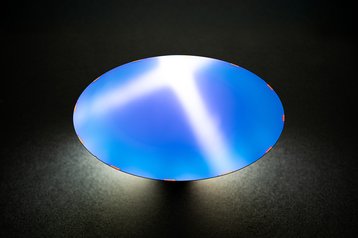
The company will use the funding to further scale its Barium Titanate (BTO) production – a high-performing electro-optical material which is “ideally suited” for ultra-high-performance optical switches – to the volumes needed for utility-scale quantum computing. Currently, PsiQuantum manufactures 300mm wafers of BTO in California, which are then integrated together with wafers manufactured at GlobalFoundries.
“Only building the real thing—million-qubit-scale, fault-tolerant machines—will unlock the promise of quantum computing,” said Jeremy O’Brien, PsiQuantum co-founder and CEO.
“We defined what it takes from day one: this is a grand engineering challenge, not a science experiment. We tackled the hardest problems first - at the architectural and chip level - and are now mass-manufacturing best-in-class quantum photonic chips at a leading US semiconductor fab. With this funding, we’re ready to take the next decisive steps to deliver the full potential of quantum computing.”
Founded in 2016, PsiQuantum says its mission is to “build and deploy the world’s first useful quantum computer.” The company, which counts Australia's O’Brien and Terry Rudolph amongst its co-founders, claims to have a “fast and feasible path to large-scale fault-tolerant systems” by using existing technologies, such as high-power cryogenic systems.
In February 2025, PsiQuantum unveiled its Omega quantum photonic chipset, purpose-built for utility-scale quantum computing, and the company is also planning to break ground on two “data center-sized” quantum computing centers this year, one in Brisbane, Australia, and the second in Chicago, Illinois.
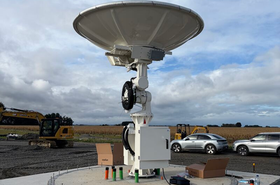
The Australian center, set to be built at a site near Brisbane Airport, will house an AU$940 million (US$620m) quantum computer.
The company also has an R&D facility in Daresbury in the north west of England, which focuses on large-scale cryogenic infrastructure to support the development of advanced cryogenic systems. Former Intel CEO Pat Gelsinger recently paid a visit to the site.





Comments