
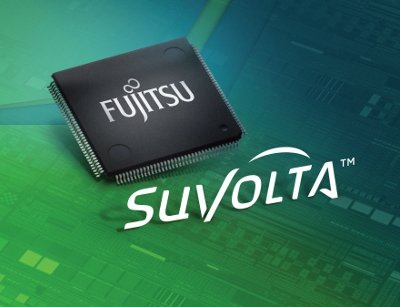

SuVolta, the Silicon Valley startup backed by a number of heavy-weight venture-capital firms, has closed another round of funding, raising an additional US$17.6m.
The company’s focus is on cutting energy consumption of microprocessors through its Deeply Depleted Channel (DDC) low-power semiconductor technology. The company licenses the technology to semiconductor manufacturers, and Fujitsu was first to jump on board in June 2011.
John Doerr, partner at Kleiner Perkins Caufiled and Byers, one of the investors in SuVolta, said the firm’s PowerShrink transistor was a “true game changer”.
“It solves the semiconductor industry’s greatest challenge – power – without requiring billions of dollars investment in new fab facilities and chip designs,” he said.
All existing investors participated in the financing round, joined by one new participant: Bright Capital, a Russian venture-capital firm focused on sustainable energy and logistics industries.
SuVolta’s previously existing investors include Kleiner Perkins Caufield and Byers, August Capital, New Enterprise Associates, Northgate Capital, DAG Ventures and others.
The company said it will use the new funding to continue developing low-power silicon technologies for semiconductors.
SuVolta claims its technology cuts chip power consumption by 50% to 90%. The technology enables reduction in processor power consumption and in the amount of leaked power.
SuVolta does this by reducing threshold voltage variation – the variation in voltage applied to each of the countless transistors on a chip to turn it on. The company says this variation reduces performance, increases power consumption and limits power supply scaling. Its technology, it claims, reduces threshold voltage variation by 50%.
The technology can be applied to processors, static random-access memory devices and system-on-chip circuits.