

DuPont Fabros Technology, one of the largest wholesale data center providers in the US, is making a foray into the retail colocation market, albeit a small one.
The company is setting aside some space at two of its East Coast data centers hoping that its new tenants Amsterdam Internet Exchange (AMS-IX) and London Internet Exchange (LINX) will make the offering attractive for small-footprint deployments.
DuPont's branching out is a direct result of its participation in Open-IX, a new standards and certification organization created to dilute the control of all relevant internet exchanges in the US by a handful of colocation providers. By endorsing data center and exchange operators that meet its standards, the organization hopes to foster a critical mass of peering partners in locations other than the few incumbent data centers.
Both data center providers, such as DuPont Fabros and its competitors Digital Realty Trust, CoreSite, RagingWire and CyrusOne, and exchange operators, such as AMS-IX, LINX and Deutscher Commercial Internet Exchange (DE-CIX) have joined the non-profit.
The biggest incumbent that currently controls key internet exchanges in the country is Equinix, but Verizon Terremark, CoreSite and Telx also control major peering points.
Hossein Fateh, DuPont president and CEO, said the company used Open-IX as a way to get into the retail colocation market. “We believe this is a good opportunity to step into a cabinet-based offer, where customers can lease one or more cabinet, connect to fiber provider of their choice and to one of the Open-IX switches and subscribe to our Level 1 IT support, should they need assistance,” he said on the company's fourth-quarter 2013 earnings call.
While he expected some of the company's wholesale customers to connect to the exchanges, Fateh said they would do it only for redundancy. “Don't forget, we only have 38 customers,” he said. “And most of them are so large that they buy a big pipe or dark fiber and do their connectivity themselves.”
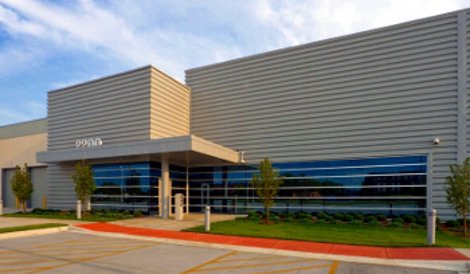
The company plans to start the retail offering at its ACC5 data center in Ashburn, Virginia, and the NJ1 facility in Piscataway, New Jersey. It is allocating a relatively small footprint to this initial roll-out: about 0.8MW total across the two locations, or 0.5% of its portfolio.
“It's going to be a very small operation,” Fateh said. “So, in Virginia, we're talking less than 40 racks.”
Since a number of its wholesale customers are retail colocation providers, DuPont's management is confident its facilities are suitable for this kind of services.
This means DuPont will now compete with some of its tenants, but Fateh said competition between service providers and their customers was commonplace. “They know we're offering it,” he said, “and we're not really concerned, frankly.
“There are customers even within, say, a ServerCentral that could potentially compete with a ServerCentral. So it happens all the time.” ServerCentral is a major DuPont customer.
The company expects to make the retail offering available in the second quarter, Fateh said. It timed the launch to coincide with launch of AMS-IX an LINX in its data centers.
The internet exchanges will offer free connectivity to their switches to DuPont's customers for an initial term.
While the initial roll-out is small, the company hopes to have a much larger retail offering ready to go between 2017 and 2019, when some of its current customer leases come up in Ashburn, Fateh said.
DuPont has not yet settled on pricing for the retail offering, but Fateh expects its margins to be somewhere around 40%. Its wholesale margins are typically in the 60 percentile, he said.