
AI cloud provider Nebius has raised $1 billion in convertible debt financing.
As reported by Bloomberg, the debt is split into two tranches, half of which is due to be repaid in 2029 and the other half in 2031. The notes will convert into equity on the basis of the original amount of debt.
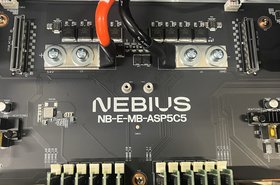
Becoming Nebius
Following Russia’s invasion of Ukraine, Nebius rose from the ashes of Yandex and is now positioning itself as a major player in the AI cloud space
The funding will be used to help Nebius further expand its data center footprint and to acquire further AI hardware.
Goldman Sachs is acting as the sole placement agent, and the notes will go to 'qualified' institutional buyers.
The company secured $700m in equity funding in December 2024 from investors including private equity firm Accel, Nvidia, and certain accounts managed by Orbis Investments.
During Nebius' recent earnings call, the company increased its projected capex for 2025 from $1.5bn to $2bn.
CCO Tom Blackwell noted that the company is in “quite a unique position among neoclouds” in terms of how it can “finance future growth” due to the company having ownership and equity stakes in other businesses which can "translate efficiently into bottom-line results of the core business.”
He added that the company would also have “access to more traditional funding sources, and we will look at those from time to time.”
Nebius was formed last year after Russian tech firm Yandex's European operations were spun off into a separate entity. Based in Amsterdam, Nebius took control of Yandex's Finnish data center, its Nebius AI unit, as well as data firm Toloka AI, edtech provider TripleTen, and autonomous driving firm Avride.
The company is aiming to achieve a baseline of 100MW of capacity in 2025, but according to COO Roman Chernin, the ambition is actually to grow “much larger and much faster” with the company looking to build a data center pipeline to provide "scalability to more than 1GW of power.”
Nebius recently signed an agreement to build and operate a $140m national supercomputer with 4,000 Nvidia Blackwell GPUs, partially funded by the Israeli government's Innovation Authority. The company has since said that this was not necessarily in its "roadmap" but an opportunity that arose unexpectedly.




Comments