
Microsoft’s Climate Innovation Fund has made an investment in the US-based peatland restoration firm, Pantheon Regeneration.
First reported by the Carbon Herald, the investment will support the company on its first peatland restoration initiative called Pocosin Ecological Reserve I. The initiative will span 14,500 acres in the Scuppernong High, one of the deepest peat deposits on the Southeast coast of the US.
“The Pantheon team has been driven from day one by the enormous potential of our ecosystem restoration work to deliver the type of landscape scale climate solutions the planet needs and the carbon credit quality and volumes the market craves. We are grateful for this recognition of the quality of what we’re doing and know their support will enable us to scale our work,” said Pantheon CEO Tripp Wall.
According to reports, the investment will enable Pantheon to accelerate its project pipeline and expand capacity. Additionally, as part of this partnership, Erika Basham, director of the Microsoft Climate Innovation Fund, will join Pantheon’s board of directors as an observer.
“We’re thrilled to support Pantheon Regeneration’s mission to restore ecosystems and remove carbon from the atmosphere. Their innovative approach aligns with our goal to invest in scalable, science-based solutions that not only remove emissions but also deliver co-benefits such as biodiversity and water impacts,” said Basham.
Pantheon has partnered with Duke University to support its restoration process. The partnership will focus on restoring degraded pocosin peatlands to store carbon and create high-quality carbon removal credits.
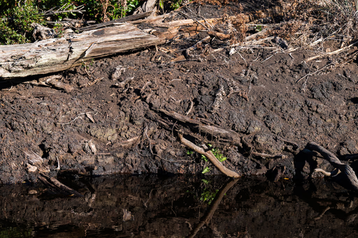
Pantheon focuses on the restoration of Pocosin peatlands, which are evergreen shrub wetlands found in the southeastern US coastal plains, characterized by deep, acidic, sandy peat soils formed from thousands of years of accumulated organic matter. The peatlands act as an effective carbon sink, storing large amounts of CO2, which makes up 90 percent of their organic matter. At present, peatlands store around 30 percent of the world's carbon. However, if drained or disturbed, the CO2 is subsequently released, turning them into carbon emitters.
Microsoft launched its $1 billion Climate Innovation Fund (CIF) on January 16, 2020. So far, the fund has invested approximately $800 million in more than 67 companies, focusing on carbon removal, biofuels, and low-carbon building materials.
Microsoft is by far the largest purchaser of carbon removal credits. In 2025 alone, it has signed numerous deals across the carbon removal space.
Most recently, in October, it inked a 300,000-ton removal deal with Arca, an industrial mineralization company. Earlier that month, it signed a deal with enhanced rock weathering firm Undo for 28,900 tons of carbon removal credits. It has also signed deals to purchase 2.95 million tons of removal credits from a CCS project in Denmark, a 2.6 million credit deal with sustainable farming group Agoro Carbon Alliance, and a 44,000 credit deal with biochar firm Carba.




Comments