
Microsoft has expanded its sovereign cloud offerings across public and private cloud deployments.
In a blog post, the company noted the introduction of many tools including a Sovereign Control Panel which is now in public preview and enables organizations to assess and control where workloads are running and if it meets sovereignty requirements within a single portal.
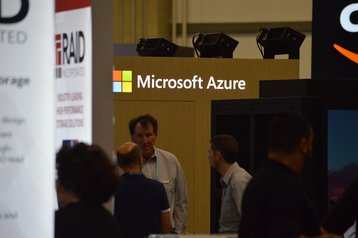
Commenting on the launch of new tools, Microsoft CEO Satya Nadella said at the Microsoft AI Tour in London last week: "One of the best ways to manage risk is to have a portfolio approach. So you have a public cloud, a public cloud with sovereign controls. You have a private cloud, and then you also have, in some cases, partner ecosystem clouds that are nationally built. And so this combination is what will give you the choice and the controls and the resilience."
He added that among the new launches of features are "clean rooms" which enable users to "have the ability to detect any tampering of logs during administrative process, and so those are all capabilities that we are building into our sovereign cloud and in the, you know, sovereign controls in the public cloud, as well as, you know, giving you fully disconnected operations with your private cloud."
Microsoft Sovereign Private Cloud was launched in 2025 and is based on its Azure Local offering, in which hardware is deployed within customer or third-party data centers.
Among the new tools set to become available are Foundry Local, which will be generally available in November on Azure Local and give users access to AI models including those by Microsoft, partners, open-weight, and open-source models. The company notes that "Local inference and agentic retrieval will also enable users to interact with local enterprise data using natural language and receive responses grounded in that data."
In addition, Confidential virtual machines have been launched on Azure Local, which brings confidential computing capabilities to customer-controlled infrastructure.
Microsoft's blog post states: "Hardware-encrypted memory and hardware-based isolation help protect sensitive data while it is being processed. Workload attestation adds assurance before sensitive data or keys are released. For regulated, sensitive, and mission-critical workloads, these safeguards provide another layer of protection while giving organizations greater control over where their data and applications run."
A further addition is that Azure Local will now support multi-tenancy, allowing organizations to separate resources, governance, and management across multiple tenants while sharing the underlying infrastructure.
Overall, Microsoft states in the blog post that "Microsoft Sovereign Cloud is designed to make it easier for organizations to apply the appropriate level of control to each workload without forcing every application into the same deployment model."
The launch of these new sovereignty models came around the same time the UK's Competition and Markets Authority (CMA) concluded its investigation into the company, deciding that Microsoft meets the statutory conditions for a strategic market status (SMS) designation.
The decision was made due to what the CMA found was significant market power for Microsoft in the cloud computing sector, including significant reliance on its business software, and suggests this creates obstacles to changing vendors or to new competitors emerging.
A consultation period is open until November 13.





Comments