
Meta plans to "invest aggressively" in AI data centers and cloud capacity, with the company noting that its compute requirements continue to grow.
The spending increase was disclosed in an earnings call where the company reported revenues of $51.24 billion, above Wall Street expectations. But earnings per share of $1.05 were far below expectations of $6.70 thanks to a one-time non-cash income tax charge of $15.93bn.
Shares in the company fell nearly 10 percent on news of the charge, related to Trump's 'Big Beautiful Bill,' and due to the fact that Meta's costs continue to rise.
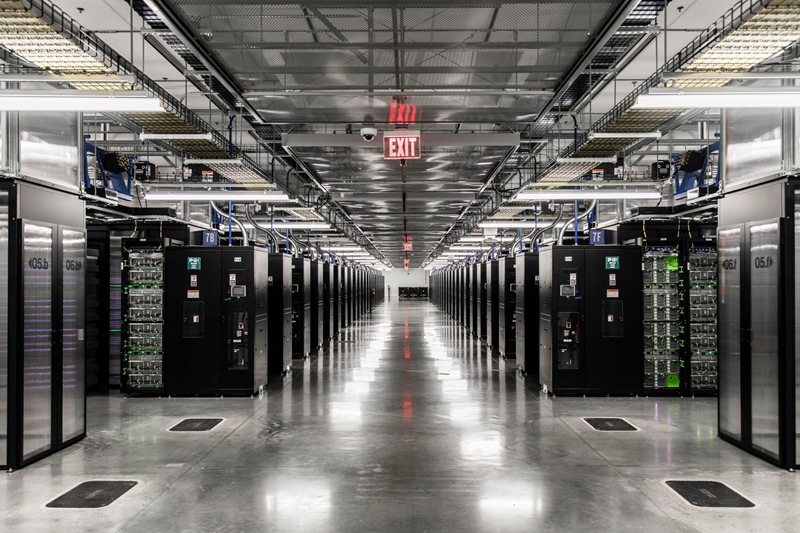
Across increased capex spend and an AI hiring spree that has seen key individuals offered billion-dollar packages, cost growth has outpaced revenue growth at the company.
The company said it expects 2025 capital expenditures to be between $70bn and $72bn, up from a previously projected range of $66bn and $72bn.
Next year, capex growth is expected to be "notably larger," CFO Susan Li said.
"As we have begun to plan for next year, it's become clear that our compute needs have continued to expand meaningfully, including versus our own expectations last quarter. We are still working through our capacity plans for next year, but we expect to invest aggressively to meet these needs, both by building our own infrastructure and contracting with third-party cloud providers.
"We anticipate this will provide further upward pressure on our capex and expense plans next year."
Alongside its own gigawatt data center construction projects, Meta reportedly signed a $10bn+ cloud deal with Google in August, followed by a $14.2bn CoreWeave deal this September, and is in talks with Oracle for a $20bn contract.
To fund its 2GW Hyperion data center, the company entered into a $27bn joint venture with Blue Owl Capital, with the latter company covering 80 percent of the cost.
"Going forward, the construction cost of the data center will not be recorded in capex as the data center is constructed; we will contribute 20 percent of the remaining construction costs required, which is in line with our ownership stake, and those will be recorded as other investing cash flows," Li said.
That means most of the 4m sq ft facility's costs are not included in Meta's capex increase expectations.
Li said that the financial arrangement also "gives us long-term optionality in supporting our future capacity needs just given both the magnitude, but also uncertainty of what the capacity outlook in future years looks like."
CEO Mark Zuckerberg also spoke to the uncertainty amid growing concerns of data center overbuilding and an AI bubble.
"We're also building what we expect to be an industry-leading amount of compute," he said.
"Now there's a range of timelines for when people think that we're going to get superintelligence. Some people think that we'll get there in a few years. Others think it will be five, seven years or longer. I think that it's the right strategy to aggressively frontload building capacity so that way we're prepared for the most optimistic cases. That way, if superintelligence arrives sooner, we will be ideally positioned for a generational paradigm shift in many large opportunities."
However, should it take longer to reach superintelligence, "then we'll use the extra compute to accelerate our core business which continues to be able to profitably use much more compute than we've been able to throw at it."
Should that change, "in the worst case, we [would] just slow building new infrastructure for some period while we grow into what we build."
More in The Investment & Markets Channel
-

-

-
Episode DCD>Inside Virginia
Comments