
A request to annex land for the construction of a data center project in Ashville, Ohio, was denied by local authorities on Monday.
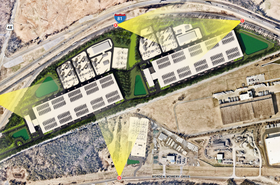
The request was submitted by global data center developer EdgeConneX, which planned to build a 680-acre campus on two land parcels located in the Village of Ashville and the neighbouring Harrison Township.

EdgeConneX already owns the former parcel, which covers around 200 acres of land, and it was the latter 490-acre land parcel that was the subject of the failed annexation request.
This comes as a blow to the company, which may now have to rethink the size, capacity, and site plan of its proposed campus. It had intended to place a 1.8GW substation and several data center buildings in the larger parcel.
Opposition to the proposed data center has been fierce since residents became aware of it last November, with some taking to local Facebook groups to express their concerns.
Local authorities and EdgeConneX representatives also tried unsuccessfully to turn the temperature down through a series of public-facing initiatives.
An EdgeConneX project team hosted a two-hour informational session about the project last November, and the Village of Ashville posted written responses to questions raised by the public during a council meeting in December.
Village Administrator Bert Cline also issued a statement, saying that “collaborating with developers to achieve mutual goals [would] go much further than opposing development outright and creating adversarial relationships.
“My biggest concern is that if we fight this and do not prevail, we have wasted considerable time and resources, and the development comes to Ashville without any additional benefit to the community.”
According to Cline, EdgeConneX had also agreed to fund the repair of sewage infrastructure and schools in the Village.
Founded in 2009, EdgeConneX has a global footprint of 80 data centers in operation or development across more than 50 markets across North America, Europe, APAC, and South America. The company was initially focused on smaller-scale data centers in the US, but has gradually expanded its scope and geography, moving into build-to-suit and hyperscale facilities.





Comments