
The Kazakh government hopes to develop a 'data center valley' in the north-eastern region of Pavlodar.
President Kassym-Jomart Tokayev said that such an endeavor would require significant power investment and would use the energy resources of the Ekibastuz coal basin.
“That is a promising proposal; however, we will need to assess its successful implementation,” Tokayev said during the 5th session of the National Kurultai in Kyzylorda.
He further explained (translated): "We need to start commissioning new power sources without waiting for the construction of nuclear power plants to be completed. It is also important to keep in mind that data centers consume a large amount of energy, similar to metallurgical plants. Therefore, ensuring an adequate supply of power sources must be considered a crucial part of state policy."
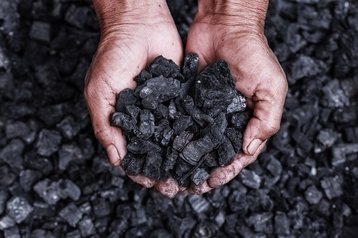
This power could come from Kazakhstan's "huge coal reserves," he said, at 33 billion tons. "Even if we continue to produce at the current rate, the reserves of coal will last for 300 years," he claimed.
"Coal is our strategic asset. We need to fully utilize coal using modern technology that eliminates all its environmental harm. President Trump is right when he says, 'I like coal, not wind.' There is some truth in this. Coal power generation should be given the status of a National Project. I instruct the government to develop a National Project and adopt it by March 20."
Tokayev also spoke to the challenges with deploying gas-fired power generation, and said that the company needed to search for new gas fields. "This is a direct consequence of ineffective planning. In the current exceptional situation, this is absolutely unacceptable."
The Central Asian nation of Kazakhstan is far from a data center hotspot.
With Russia to its north and China to its east, it has courted investment and development from both nations. Yandex opened a cloud region in 2024, while once-Russian-now-Dubai-based Veon plans to develop a data center this year, and local telco Kazakhtelecom is partnering with a state-owned Chinese energy firm for a 100MW facility.
The country has also deployed its own supercomputers, with UAE-based Presight behind the first of two planned facilities.
In September, Tokayev met with Blackstone's head Stephen Schwarzman and pitched him on Kazakh data centers.
With an economy heavily reliant on the export of oil and coal, and after years of dramatic inflation, the largest landlocked country in the world has sought to diversify its economy.
Like many politicians, Tokayev has turned to the promise of AI and data centers in the hopes it will solve many of the challenges the nation faces.
This year has been designated the 'Year of Digitalization and Artificial Intelligence,' with 12.9MW of data center capacity expected in 2026 across three facilities. 1,900 villages are planned to be provided with high-speed Internet, and more government services are expected to shift online.
The 'year of' designation is not just a slogan, Tokayev argued. "This decision imposes a specific task on the entire state apparatus."
He added: "However, advanced technologies alone cannot eliminate the widespread inefficiencies in management. It is important to understand this. If the work is not set up correctly from the very beginning, if repetitive tasks increase, and paperwork interferes with work, it is futile to say that everything will be fixed instantly by introducing artificial intelligence.
"Therefore, to implement a digital transformation strategy, it is necessary to first adjust the management system. In this regard, an urgent task has arisen: it is necessary to improve the organizational culture of work in the public sector and introduce best practices and competencies in the field of management. With the help of digital solutions and artificial intelligence technology, there is a great opportunity to improve the quality of public administration in all areas."




Comments