
Johnson Controls has launched a reference design for using absorption chillers in data centers.
The NYSE-listed company this week launched its Absorption Chiller Reference Design Guide to help data center operators turn high-grade waste heat into power.
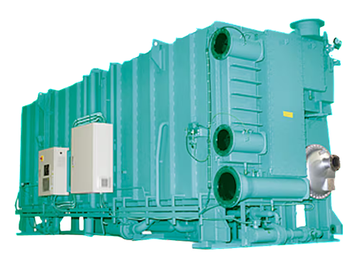
Absorption chillers use heat to generate cooling and can potentially help data centers utilize waste heat from on-site natural gas or fuel cells to reduce the amount of power needed for cooling. Johnson claims 2MW of cooling capacity via an absorption chiller would only require 25kW, compared to around 500kW for a traditional electrical chiller.
Johnson said the blueprint could help data center operators convert energy lost as waste heat from on-site power generation into productive cooling, reducing cooling-related power demands and making more power available for IT workloads.
“One of the biggest untapped opportunities in data centers is the heat they generate,” said Austin Domenici, president, global data center solutions, Johnson Controls. “Johnson Controls helps transform recovered heat into useful work through Combined Heat and Power and absorption cooling solutions, enabling AI factories to scale more efficiently while reducing strain on the grid and delivering value to local communities.”
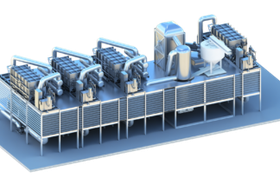
Johnson said the reference design features modular architecture that can scale from 100MW campuses to gigawatt-scale data centers without redesign.
Absorption chillers feature water typically mixed with lithium bromide in a vacuum. The heat (hot water or steam) pumped into the chiller causes the water in the mixture to evaporate, and the water vapor is then sent through condensers and cooling towers. The condensed water is then sent back to be mixed with the salt solution and start the process again.
Via its York unit, Johnson Controls has long provided absorption chillers to industries including defense, healthcare, and manufacturing. The technology has not traditionally been used within the data center sector because the heat expelled from IT gear (even GPUs) is not high enough to work with absorption chillers. Natural gas turbines and fuel cells, however, provide higher-grade heat, and their increasing use on-site at data center campuses opens up new opportunities for operators.
“A vast amount of heat produced by on-site power generators is essentially thrown away — dissipated into the air. We see a huge opportunity when that energy is put to work instead," added Katie McGinty, vice president and chief sustainability and external relations officer, Johnson Controls. "By converting waste heat into useful cooling, we're turning a resource already bought and paid for into an asset rather than a disposal liability. Every megawatt we can shift from cooling to computing capacity helps customers increase the revenue potential of their facilities and accelerates time to value by significantly cutting pressure on the grid. That's the kind of innovation that supports AI growth, lowers costs and helps communities and businesses get more from existing energy resources.”
Absorption chillers could also be used in conjunction with small nuclear reactors if they are deployed on-site at data center campuses in the future.






Comments