
US-based data center provider i/o is expanding its reach beyond the US, planning to build its next modular data center in Singapore.
The company is currently looking for a large site in the Southeast Asian city-state, i/o CEO George Slessman told DatacenterDynamics. The decision was driven by the provider’s existing customers who needed capacity there.
"Singapore will be a site similar to Phoenix and New Jersey, so it will be a very large site," Slessman said. Phase I of the Phoenix facility is more than 530,000 sq ft and the New Jersey data center (currently being built out) is more than 800,000 sq ft.
i/o is planning to launch the Singapore data center in the first quarter of 2012, after which it will expand its global reach even further with a facility in either Europe or Brazil. It has not been decided which of the two markets i/o will go to next.
Since the company is planning to continue building out capacity in modules, as it is doing in the second Phase in Phoenix and in the entire New Jersey facility, the site selection process is easier than it would be for a traditional build.
"With the modular solution, site acquisition really comes down to core power and network access," Slessman said. "The physical building itself becomes less important."
The modular approach also allows for quicker time to market, since the modules are pre-manufactured off-site and the building shell does not need much in terms of improvements.
"We took possession of the New Jersey building on, essentially, April 1st," Slessman said. "We’re moving our first customer in a 3MW data center on June 1st."
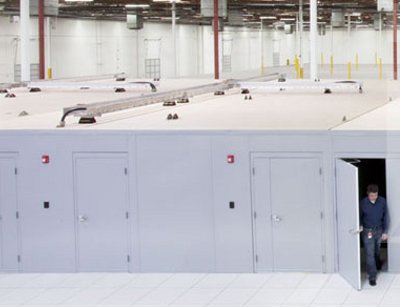
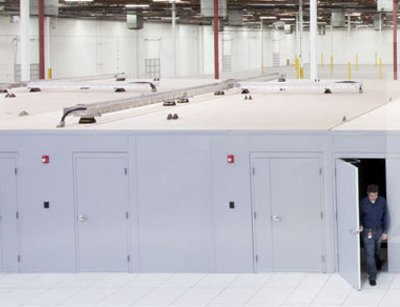
i/o’s modules, called "i/o Anywhere", can accommodate any IT hardware and include all critical infrastructure. They can either be managed by the customer or by i/o’s own staff.
The company has a factory in Phoenix – its home base – where it manufactures the modules. The factory was launched in February and, in its first production ran, has built more than a dozen modules, Slessman said.
The next 22 are currently in production, with 120 modules due by the end of 2011.