
The data center industry in Africa – which only accounts for 0.6 percent of global capacity – faces a “stark challenge” if it wants to grow, says a report by Africa Data Centers Association.
It states that the continent’s share of global data center capacity is expected to remain “broadly unchanged as investment accelerates in the United States, Europe, and parts of Asia,” and that the continent’s growth is limited by supply-side infrastructural problems as well as constrained demand.
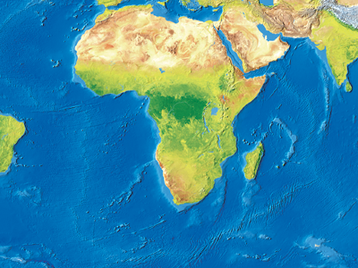
Africa currently sports 1.2GW in data center capacity, defined in the report as the sum of projects that are active, under construction, and in the development pipeline.
Roughly one-fourth of this capacity – around 360MW – is attributable to active data centers, but most of the capacity – around 656MW – is made up of projects that are in the pipeline. Almost all of these projects are located in South Africa.
Occupancy rates on the continent sit at around one-third of available capacity, which the report attributes to pre-emptive construction ahead of the “imminent arrival of global hyperscalers.”
Just last week, Microsoft said in a blog post penned by vice chair and president Brad Smith that the company would be investing $50 billion across the Global South in regions including Africa, India, Mexico, South America, Southeast Asia, and the Middle East.
But the exact amount that would be used to fund the construction of African data centers was not disclosed.
The report further claims that low occupancy rates are attributable to the limited amount of consumer data being generated, which is caused by the high cost of mobile data relative to income across the continent.
Africa’s data plans are some of the least affordable in the world, according to broadband comparison service Broadband Genie. Although the actual cost of these plans is among the lowest in the world, they take up the highest proportion of one’s salary in comparison to every other continent.
Most of the continent’s data is also processed and stored offshore.
This is compounded by supply-side constraints, like the low availability of power infrastructure and long lead times for the delivery of critical assets.
Existing transmission infrastructure is also unable to handle high-density requirements, and grid instability means that African data centers have a higher-than-average PUE than the global benchmark.
Transmission losses between the power plant and the data center, amplified by the distance between energy hubs and consumers, are also significant – the report states that losses in East and West African nations remain as high as 18 to 25 percent.
More in Investment / M&A / Financing
-

-

-

Episode 2027 Trends and Outlooks: Europe




Comments