
IBM has debuted a reference architecture for quantum‑centric supercomputing.
The company claims the blueprint demonstrates how quantum computers can be integrated into modern supercomputing environments, enabling quantum processing units (QPUs) to work alongside GPUs and CPUs to solve “scientific challenges that no single computing approach can solve on its own.”
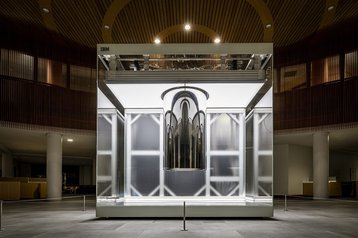
IBM’s approach involves combining quantum hardware and classical infrastructure such as compute clusters, networking, and shared storage. Coordinated workflows spanning quantum and classical computing can then be run on top of this foundational hardware layer, with integrated orchestration and open software frameworks, including Qiskit, allowing developers to access quantum capabilities through familiar tools.
The company claims that scientists from a number of different research centers are already using its quantum-centric architecture to deliver “accurate results for real experiments.” These include the Cleveland Clinic, which has simulated a 303‑atom tryptophan‑cage mini protein, one of the largest accurate molecular models that has been run on quantum computers to date.
Additionally, researchers from RIKEN and the University of Chicago have uncovered the lowest-energy state of certain quantum systems, with a separate RIKEN project demonstrating how quantum and classical computers can work together to create large-scale, accurate simulations of iron-sulfur clusters.
“More than four decades ago, Richard Feynman envisioned computers that could simulate quantum physics,” said Jay Gambetta, director of IBM Research and IBM Fellow. “At IBM, we’ve spent years turning that vision into reality. Today’s quantum processors are beginning to tackle the hardest parts of scientific problems - those governed by quantum mechanics in chemistry. The future lies in quantum-centric supercomputing, where quantum processors work together with classical high-performance computing to solve problems that were previously out of reach. IBM is building the technology and systems that bring this future of computing into reality today.”
IBM has been at the forefront of the development of quantum processors and, in February 2025, claimed to have booked $1 billion in quantum business between Q1 2017 and Q4 2024.
In November of that same year, IBM claimed it would achieve quantum advantage by the end of 2026, and is on target to develop a fault-tolerant quantum computer by 2029.
In the upcoming issues of the DCD Magazine, we spoke to IBM about quantum computing and how the quantum chips that power QPUs are manufactured. You can register to read it here.



Comments