
Huawei’s chips remain one generation behind those made by their US counterparts, the company’s CEO has said.
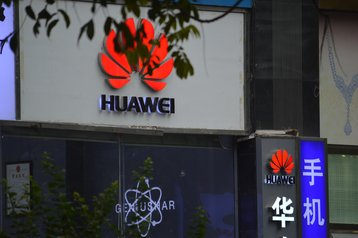
Ren Zhengfei made his comments to Chinese state media hours before officials from the two countries met to strike a deal aimed at easing trade tensions between the nations.
Huawei ‘not that great,' CEO says
Speaking to the People's Daily, the newspaper of the governing Communist Party, Ren said: "The United States has exaggerated Huawei's achievements. Huawei is not that great. We have to work hard to reach their evaluation.”
He added: "Our single chip is still behind the US by a generation. We use mathematics to supplement physics, non-Moore's law to supplement Moore's law and cluster computing to supplement single chips and the results can also achieve practical conditions. Software is not a bottleneck for us.”
China has had its access to advanced chips from abroad restricted by the US government for a number of years, with Washington putting export controls on firms with operations in America to stop them selling to Chinese clients. This means companies in China have been unable to access the equipment required to make leading-edge semiconductors used in AI servers.
Chinese companies such as Huawei have redoubled their efforts to come up with their own chip manufacturing processes, and Huawei and SMIC reportedly want to launch a three-nanometer process node in 2026. TSMC, the world’s biggest chipmaker, already builds 3nm chips and plans to bring its 2nm process online this year.
Huawei has previously made efforts to develop its own advanced lithography machine to get around US sanctions on ASML, the only firm currently capable of building such devices, which are key to the chipmaking process.
US and China agree framework to ease trade tensions
Meanwhile, officials from the US and China said on Wednesday that they had agreed on a framework for a deal tackling some aspects of the trade war between the two countries.
It follows a call between US President Donald Trump and his Chinese counterpart Xi Jinping earlier this month.
Trump had threatened China with massive tariffs of up to 145 percent as part of a wider plan to tax US trading partners. The legality of some of these tariffs has been called into question by the US courts, and many have yet to be implemented.
China has retaliated with restrictions of its own, limiting sales of rare earth materials and magnets required for making components such as semiconductors and other IT equipment.
Details of the framework have not been revealed, but US Commerce Secretary Howard Lutnick told reporters it would see the Chinese controls on minerals rolled back, with the US also removing some of its sanctions.
The deal still needs to be agreed by Trump and Xi.




Comments