

HP’s research arm HP Labs is working on a data center architecture whose grid-energy consumption over the course of its lifetime equals ‘zero’.
The basic Net-Zero Energy Data Center’s idea is to time processing of non-critical compute workloads at times when a renewable energy source is at peak capacity (when there is sunshine or wind) or when outside-air temperature is low enough to use free cooling. The emphasis is on local sources of renewable energy.
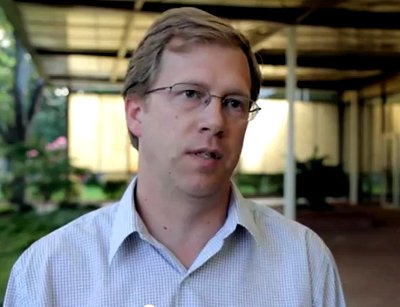
Cullen Bash, distinguished technologist at HP and an interim director of the company’s Sustainable Ecosystems Research Group, said while information technology could be an “equalizer” across societies, its cost (including the cost of energy) has prevented it from widespread adoption.
“The HP Net-Zero Energy Data Center not only aims to minimize the environmental impact of computing, but also has a goal of reducing energy costs associated with data-center operations to extend the reach of IT accessibility globally,” Bash said. In an HP video about the research project, Bash said, a sustainable way of doing IT usually translates directly into the most cost-efficient way of doing it.
The architecture’s name does not mean the data center does not take energy from the grid. It does, but the goal is for it to use a “net-zero energy” from the grid over its lifetime. Other key targets of the research project are a two-year payback and meeting service-level agreements.
The architecture consists of four modules:
Prediction module: Leverages powerful predictive analytics software to forecast the availability and cost of critical resources, such as renewable energy and IT workload demand.
Planning module: Delivers an optimization algorithm that balances workload scheduling with high-level operational goals, such as achieving net-zero energy operation, enabling organizations to schedule workloads based on resource availability, while meeting data-center operational goals.
Execution module: Enables organizations to manage workload and energy consumption in real time according to performance requirements and data-center operational objectives.
Verification and reporting module: Identifies and remediates misalignment between the plan and execution, ensuring plan accuracy.
HP developed the Prediction module together with Virginia Polytechnic Institute in the US, and the University of Limerick in Ireland.
HP Labs’ formula for net-zero energy is as follows (“E” stands for “energy”):
E net = E embedded + E operations - E operations, renewable
The company has set up a test-bed for the Net-Zero Energy Data Center blueprint at the HP Labs headquarters in Palo Alto, California. The research unit has also produced a research paper that describes the architecture.
The idea to schedule compute jobs in order to maximize the use of renewable energy is not new.
A team of computer scientists at Rutgers University have built two systems that do similar things. One of them is GreenSlot, which schedules scientific-computing workloads in accordance with predictions of availability of solar power, and the other is GreenHadoop, which does the same with Hadoop jobs, prioritizing solar energy first, then cheaper non-peak grid energy and then, as a last resort, peak-rate energy.
While GreenSlot knows exactly how much power and how many servers a workload will require, GreenHadoop has the ability to assess this automatically, based on historical data.
Read more about GreenSlot and GreenHadoop in the upcoming issue of DatacenterDynamics FOCUS.