
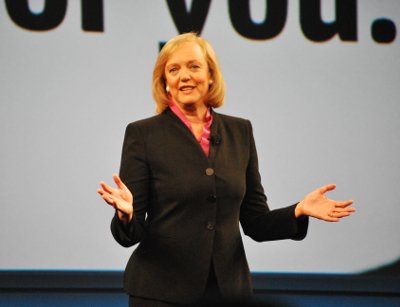

HP president and CEO Meg Whitman said she was not afraid of commoditization of IT infrastructure and hardware – something that drives about 70% of the company’s business – during her keynote presentation on Tuesday at HP Discover, the company’s annual conference in Las Vegas.
“My answer to that is not if we can help it,” Whitman said. “We are proud to be in the infrastructure business.”
Commoditization is when a market for a unique branded product becomes a “market based on undifferentiated price competition,” according to a Wikinvest definition.
As the world’s largest provider of personal computers (PCs), HP has had first-hand experience with commoditization. The most recent example of massive commoditization happened in the PC business, where the technology became so ubiquitous that vendors could not compete on anything but price, which dropped rapidly as a result.
There are already signs of commoditization in the server market today. Many of the leading IT end users, such as Google, Amazon, Microsoft and Facebook, already design much of the hardware in their data centers themselves and get it made cheaply by Original Design Manufacturers (ODMs).
As a result, they cut Original Equipment Manufacturers (OEMs), the HPs and Dells of the world who also have their products manufactured in Asia, out of the supply chain, according to a Wired report.
HP is tackling this issue using its strategy to deliver its hardware, software and services as complete solutions, Whitman said in her keynote. Most of HP’s biggest competitors in the market for business technology infrastructure have chosen this strategy as well.
She reiterated the three strategic pillars HP’s technology strategy the company announced in May in its earnings reports for the second quarter of fiscal 2012: cloud, security and information optimization.
The company made several major announcements at Discover on Monday that fit in the information-optimization play. It expanded support for Apache Hadoop by launching a hardware architecture designed specifically for the distributed-processing framework, upgraded its analytics software Vertica to use Hadoop as one of the data sources and made enterprise-software products by Automony easily to integrate with Hadoop.