
Horizon Fuel Cell has launched a new 3MW module designed to act as backup for data centers.
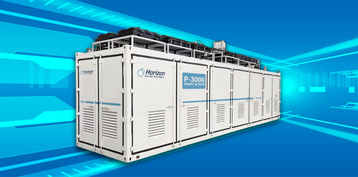
The fuel cell solution, known as Horizon Packs, is a containerized system around 40 feet (12.1 meters) in size. According to the company, the cells can provide 100 percent more power than proton-exchange membrane (PEM) fuel cells and 300 percent more power than solid oxide fuel cells (SOFC), which have seen the most traction within the data center market.
The company stated that the small footprint is made possible by incorporating its 400kW fuel cell stacks, which have been rolled out across its hydrogen-powered heavy-duty vehicle initiative.
Horizon said that the new fuel cell solution fits perfectly within a data centers' infrastructure, due to its high power density, small footprint, and low carbon credentials, with water as the only byproduct.
In addition, Horizon also announced a one-ton hydrogen storage system, which can supply the fuel cells with fuel for its operations. According to the company, multiple units of the system, which are also housed in a 40-foot container, can provide between eight and 40 hours of backup power. As a result, Horizon claims that the solutions have the capacity to achieve total cost of ownership parity with diesel generators when deployed at scale.
Horizon has primarily deployed its fuel cells across chemical complexes, where a supply of waste hydrogen is available. It has yet to sign a supply deal with a data center developer, but has earmarked the industry as a burgeoning offtaker for its technology going forward.
Horizon was founded back in 2003 and is headquartered in Singapore. It claims to have an installed production capacity of more than 1.5GW per year and offers a range of PEM fuel cells, as well as hydrogen storage solutions.
Hydrogen fuel cells have begun to gain increasing popularity amongst data center developers seeking off-grid, low-carbon power solutions. The most significant player in the market is Bloom Energy, a developer of SOFCs. In July, the company became the first fuel cell developer to sign a direct hyperscale agreement, inking a deal with Oracle to power an entire data center via its SOFC solution. Bloom has also signed deals with Equinix and US utility American Electric Power.
Several data center companies have also tested the applicability of hydrogen as a backup solution for their facilities. Most notably, last year, Microsoft partnered with Caterpillar on a demonstration project to test the viability of using hydrogen fuel cells to supply reliable and sustainable backup power to a data center for two days. The project was undertaken at Microsoft’s facility in Cheyenne, Wyoming, and was successful in powering the data center during the 48-hour period.








Comments