
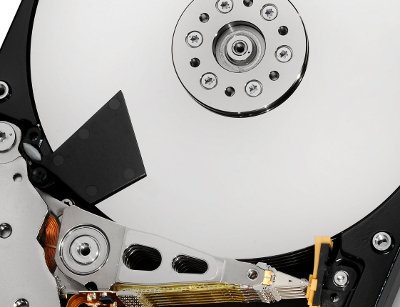
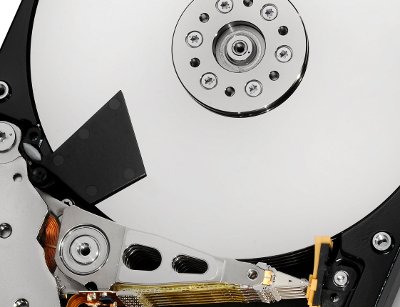
HGST, formerly known as “Hitachi Global Storage Technologies”, says it has a solution to the performance bottleneck in IT architecture caused by the physical limits of spinning disk that is alternative to solid-state memory: filling hard drives with helium, instead of air.
Helium’s one single property breaks through a number of performance brick walls spinning media have run into. That property is density or, more precisely, extremely low density.
Helium’s density is one-seventh of air’s density, which means there is less drag force on the spinning disk, and there is less interference with the precise positioning of reading arms over data tracks. This leads to faster-spinning disk, more precise data reading and much smaller power and cooling requirements.
It also means HGST can now pack seven disks into one enclosure instead of the current maximum of five.
Western Digital-owned HGST’s CTO Steve Campbell said the concept itself was nothing new. It is the ability to implement it at scale that has been the problem.
“The benefits of operating a HDD with helium fill have been known for a long time,” he said. “The breakthrough is in the product and process design, which seals the helium inside the HDD enclosure cost effectively in high-volume manufacturing,”
The company has been doing development work in material science, mechanical engineering and process technology for six years to turn this idea into a product.
HGST expects to have its first helium-filled hard drives on the market in 2013, targeting first and foremost the data center.
The company’s president Mike Cordano said the product would be optimized for both enterprise data centers and data centers operated by providers of cloud-based services.
Western Digital bought HGST (Hitachi’s hard-drive business) for US$4.3bn in March.