

Part 3 of our four-part special on the year’s M&A activity in the industry. Read Part 1 on colocation M&A and Part 2 on M&A in hardware on our website.
In 2012, companies in the IT services space have not been as acquisitive as they were in 2011. But the one major acquisition that has taken place is sure to change the global services markets landscape.
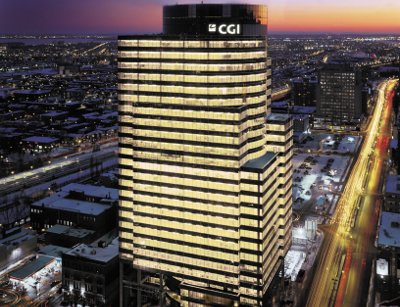
CGI Group’s purchase of Logica for about US$2.6bn in May was the year’s largest acquisition of the type. The deal is a sign that “consolidation in IT services will continue,” Tom Reuner, principal analyst at Ovum, says. Increasing scale and reach are the only ways to compete in this space, dominated by the likes of IBM, HP and Accenture.
CGI is a Montreal, Canada-based IT and business-process services company. It says it is the sixth-largest of its kind in the world after the acquisition. It now has 70,000 employees in the Americas, Europe and Asia Pacific, the bulk of whom are Logica employees. Logica, which was reportedly the UK’s largest business and technology services company, employed about 40,000 people prior to the deal.
Logica suffered as a result of Europe’s economic crisis. Its 2011 income was more than 80% down from 2010, and at the end of last year, it announced it would lay off about 1,300 staff.
The number-one benefit of the deal for both Logica and CGI is the combined company’s scale and better position to raise funds. “The scale and the access to low-cost resources is really what is driving the industry,” Reuner said. For Logica, access to funds also means consolidating, something Reuner says it needed to do but could not fund.
The UK-based company will also benefit from CGI’s experience in integrating acquired businesses, which Logica has had a spotty record in doing. Doing the deal is one thing, he says, while successfully integrating is another.
Logica – around since the late 1960s – has consistently had problems showing profitability of the assets it buys, according to Reuner. Some of its most recent deals included the purchase of Grupo Gesfor, a Spanish consulting and professional-services company in May 2011, and acquisitions of MITS (an Australian systems integrator) and of the IT services arm of the Utilities Services Corporation (also an Australian company) in 2000.
CGI has made two major acquisitions, including a 2010 purchase of Stanley Inc., an Arlington, Virginia, systems integrator for US$1.07bn. This deal instantly expanded its US federal government business. The other deal was in 2004, when it bought the civilian business of IT consultancy American Management Systems (AMS) for about $860m, for the first time gaining foothold in the US. AMS also had a defense and intelligence business, which went to another company.
Ricoh gets ADA’s European assets
Another cross-border M&A transaction took place this year, albeit a much smaller one than CGI’s Logica acquisition. Bankrupt German IT services firm ADA-Das SystemHaus GmbH was acquired by Ricoh, a Japanese electronics company specializing mainly in imaging, for an undisclosed sum.
Ricoh said it made the move for two reasons. One was that the two companies had many of the same customers and by joining forces they would become a one-stop-shop for IT and document-management services. The other was that Ricoh’s recent acquisition of Georg Kohl, a German document process outsourcing company, and the ADA deal would result in service offerings that combine IT services and managed document services.
HP/EDS – a weary benchmark
Judging whether an acquisition in the IT services space is a successful one is difficult, Reuner says. “There are few examples where acquisitions in the IT space have made sense,” he says. One of the best examples of a successful acquisition in this market remains HP’s massive purchase of EDS in 2008, in the analyst’s opinion.
HP shelled out $13.9bn for the IT outsourcing company, projecting the move to more than double its services revenue, which in fiscal 2007 was $16.6bn. This was a mega deal and, in Reuner’s opinion, a benchmark for a successful services acquisition.
This is despite HP’s recent troubles with its services business. The company said in early August its profit would take a hit as a result of writing down $8bn of the services business’ value. While buying EDS was a good idea for HP, the buyer had miscalculated the value of the assets, Reuner says. HP explained the write-down by poor market conditions and business trends in the services segment. The promise of doubling HP’s 2007 services revenue vanished, and, for fiscal 2011, the division reported $9.3bn in revenue.
The services business became a focus for CEO Meg Whitman’s ongoing restructuring of the company as a whole. When it announced the “impairment of goodwill” of the services division, HP also announced that the division’s previous head John Visentin would leave the company. HP appointed Mike Nefkens, senior VP and general manager of HP Enterprise Services for EMEA as acting head of the global services organization until a permanent replacement for Visentin is found.
This article was originally published in the DatacenterDynamics FOCUS magazine, Issue 25. Subscribe for free on the DCD website.