

IO.Applied Intelligence was established in October 2013 with the objective of changing how the data center is designed, managed and operated.
As a division of IO, the Phoenix, Arizona based technology company, IO.Applied Intelligence is aligned with the stated goal of disrupting the traditional data center market and the belief that the era of the traditionally built data center is over.
The new division will begin with the development of step-by-step performance improvements based on the gathering and analysis of information-rich data generated through the IO Operating System (IO OS) and IO Anywhere modular data center hardware.
IO already monitors and measures the behaviour of its modular built data center campuses. Its fleet operates around the world in locations including Phoenix, New Jersey, Ohio, Singapore and London. IO describes itself as a Data Center 2.0 company and says in future all data centers will be software defined. The collection of information from its existing data center deployments over a number of years has generated billions of lines of data. IO can leverage the captured data to show, for example, how the system responded to particular operational requirements or sudden changes.
It can map when the system is approaching capacity limits or show that the data center can run a more efficient operating model within more visible and more dynamic thresholds. But IO wants to go much further.
Using that information rich data, it is building an analytics platform from which it will extract real intelligence. As a newly created division within IO, Applied Intelligence will provide the information to direct product design improvements for IO Anywhere and new features in the IO OS.
IO will also seek to port learnings to other industries that can benefit from derived insights.
MCLAREN APPLIED TECHNOLOGIES
In July this year IO established a strategic partnership with McLaren Applied Technologies, the ‘third pillar’ of the UK-based engineering company best known for its F1 racing team. The second pillar is the McLaren road car business.
Working together, the companies are planning no less than an information-based revolution of the data center industry. Using quantifiable information IO will initially optimize operational performance and then, by creating detailed models, predict product behaviour. And it will ultimately provide simulations on long-term performance and efficiency, linked directly to customer use. In short, it will link the behaviour of the infrastructure to the demands of the application and derive customer value by putting an end to over specification and overcapacity.
“Current data mining activities are robust and data quality is high,” says IO’s Patrick Flynn. “Using this will allow for building predictive behaviour models. By linking models together we will make simulation tools that can predict how real or hypothetical data centers will behave.”
McLaren Applied Technologies builds behaviour models for complex systems based on real data. Think of the telemetry used in F1 races as data captured from a machine travelling at 200MPH is used to monitor the status and behaviour of all of the car’s components – even the driver. As well as real-time data for race day, this information is also the basis for building models which lead to design and operating improvements to deliver better performance.
HOW DOES THIS APPLY TO DATA CENTER OPERATIONS?
By having a valid model that describes behaviour it will become possible to create operating scenarios to make product performance a key attribute across ten-year data center investments and deployments.
An examination of data center performance is multi-faceted but not infinitely so. Security, energy efficiency, eco-friendliness and low latency are among a handful of parameters that you can describe, according to Flynn.
The synthesis of models incorporating the behaviour of electrical systems, heat rejection and computational fluid analysis will be combined along with other components and linked to the behaviour of the facility in response to customer usage. “We can build holistic models that are directionally accurate, that are detailed, informed and based on quantitative data.”
For example, if one starts with the behaviour of the IO data center module from a power perspective and the behaviour of the cooling module, then the data set will grow organically. This data can be stored and put into use to address the specific questions as problems develop. “The starting point is looking at capacity and that’s where we’ll initially put most of our efforts to understand how we bake it into our IO OS and IO Anywhere systems. If, for example, one has an imbalance in power draw in the IO Anywhere module, we want to identify where we have excess capacity and where there are bottlenecks. As we build out capacity models starting with power, then cooling, then network, we’ll have a view of what capacity exists where. This will quickly move in to better product development within IO.
This brings us closer to matching infrastructure to application,” Flynn says.
As soon as you do a piece-by-piece overlay of operating cost or eco-efficiency or security into a site, the decisions on the description of the infrastructure are made on quantified data.
“This requires lots of data analytics and here we believe we have a unique advantage because there has never been a data center tool that can capture the amount and quality of data required. With IO OS we have hit the critical number of hours of operations measuring actual data to provide the required detail. With McLaren we can develop world-class analytics,” Flynn says.
Ultimately, operations can be linked to applications and ensure financial efficiency by aligning the right workloads to the right infrastructure, thus ending excess capacity and over specification.
McLaren Applied Technologies models create a skeleton framework based on the components and on the problem you are trying to solve. Both organizations have carved out a number of work projects, focused on predictive analytics and understanding customer usage behaviour within the context of capacity.
Systems such as telemetry, real-time decision making support and simulation based on McLaren’s F1 expertise have a degree of overlap with monitoring of data points such as power usage measurement in the IO OS data flow.
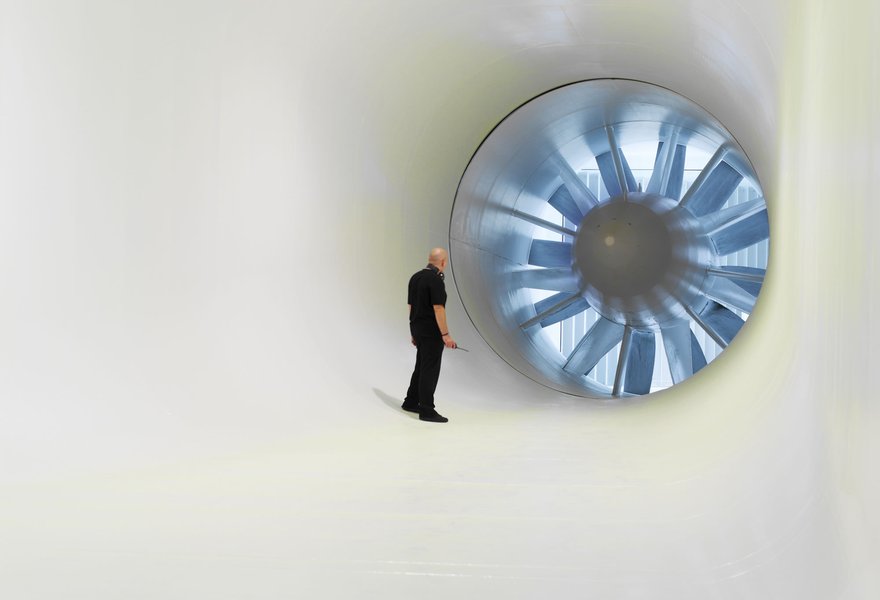
F1, the road team and McLaren Applied Technologies provide game changing insight into different industries. It is expert in thermo dynamics and fluid flow problems.
Among the questions being addressed is how to create new forms of cooling and revolutionize data center operations from power consumption to business continuity.
“This about how we continue to we anticipate customer needs. Becoming the leader in analytics is a big part of the engine of innovation within IO,” says Flynn.
Flynn believes that the partnership is based on an overlap in vision and values and a relentless pursue in performance and best practice. The engagement with MAT came about because of its work is in applied technologies and equally importantly a common culture and approach based on ‘Let’s figure out the problem, project a roadmap and define and set tangible targets.’
As Flynn says: “While it is tempting to build a model of the universe we will remain focused on customer value.”
“McLaren Applied Technologies has built one of the most sophisticated simulation tools in the world – and we want to tap into that.”

GEOFF MCGRATH _ MD MCLAREN APPLIED TECHNOLOGIES
The mission of McLaren Applied Technologies is to deliver technologies that deliver breakthrough performance. With a 50-year heritage in motor sport, the ‘third’ pillar of the famous F1 team (the other being the supercar business) is not a technology transfer business but it is a business that seeks out pioneers and visionaries with which to partner.
“The importance is that we share the same culture and part of that is to win in business terms,” McClaren’s McGrath says . “If IO wasn’t a pioneer [then] we wouldn’t work together, and we’re flattered they’ve chosen to work with us.”
The partnership will concentrate on the co-development of solutions. It will start with the performance management systems.
MAT extracts data and produces actionable intelligence. It develops simulation systems that design and support complex operations which will use predictive models on performance.
“The product reports on how it is being used, that is the intelligence inside the goods,” McGrath says.
“Together we want to be first to be simulating a data center to deliver improvement. We will simulate the data center and gain optimal performance. It is not enough to grab live data – though that in itself is an improvement compared with how traditional data centers operate today.
“It is about being able to anticipate performance. Let’s start with thermal management. We are experts in fluid flow and compact heat exchange. Using predictive analytics we come up with models to make systems more mechanically efficient.”
Jim Newton, market development director at McLaren Applied Technologies says: “You also need to build in the wider environment which encompasses user behaviour and applications behaviour with a holistic model across the whole piece. We measure what we want to manage. We feed into models. To get predictive intelligence firstly requires an understanding of how systems behave. Then you start extracting value from the data. That’s how we start designing cars, and other complex systems. This is a design challenge. First you must understand what questions you are trying to answer and then measure from there.”
This is no academic exercise. Instrumenting to increase product performance increases financial performance in the eyes of customer through responsiveness to demands.
PERFORMANCE, AVAILABILITY
McLaren is used to working in a world where risk is managed. Availability is key to value and through intelligence it detects if it is being too risk averse in its engineering. Modelling and simulation give an envelope on the shape of the risk.
Efficiency gains are achieved in more clever management of risk. The performance envelope of a car is in the engineering of the components.
“You can’t even assess the risk until you have a model and that is impossible unless you can measure,” Newton says.
McGrath agrees. He says at the moment the data center industry is just too expensive.
“It is not that engineers don’t know how to optimize systems. It looks like an industry that has been shaped by the demands of customer – now the customer is demanding different levels of support and this has led to a rethink on how a data center is engineered,” McGrath says. In his view customers are now starting to ask for a wider range of options and understand the trade-offs and risks. Why people have over specified facilities is a lack ofunderstanding of the risk profiles.
SUCCESS FACTORS
With the support of MacLaren Applied Technologies, IO.Applied Intelligence will be developing a product that will influence the way that IO delivers its data center platform to the market. Success will be measured by its acceptance amongst the customers and loyalty to the product. “Within a relatively short time span we’d like to be pointing to consoles that are monitoring data workloads across global data center estates,” Newton says.
“In a few years those that purchase, commission and operate data centers will want to invest in systems that are closer to optimal performance from the very point of commissioning a new data center and for every moment of the facilities operation. IO, with our assistance, will have changed the perception of what a data center is by ending over capacity, “McGrath says.
“When we first met with George Slessman (IO CEO and founder) what clicked was a clear passion for challenges. Through a combination of culture and technology we will deliver performance. Most significantly, we have a very similar mind set and approach to rising to new challenges and a common desire to continuous improvement.“
DCD London Converged
George Slessman, CEO and Chief Product Architect IO, will speak at DCD London Converged on Day 1, November 20th in Hall 3, at 11:20am
Dinosaur Moments, why evolution is no longer enough
Mr. Slessman will discuss the broader transformation of mainframe to PC to Cloud, a utility model applied to infrastructure, data or applications. He will then redefine Enterprise Cloud as an analytically driven combination of all three: Data Center-Infrastructure-Platform by the sip, and only as good as its agility, transparency, efficiency and security —-fail to deliver on any facet, and the near infinite scale of software, network and compute will never be realized. Mr. Slessman will close by specifying how internal and external service providers can leverage application-centric provisioning to transform, survive the coming dinosaur moment and deliver value to users for years to come.