
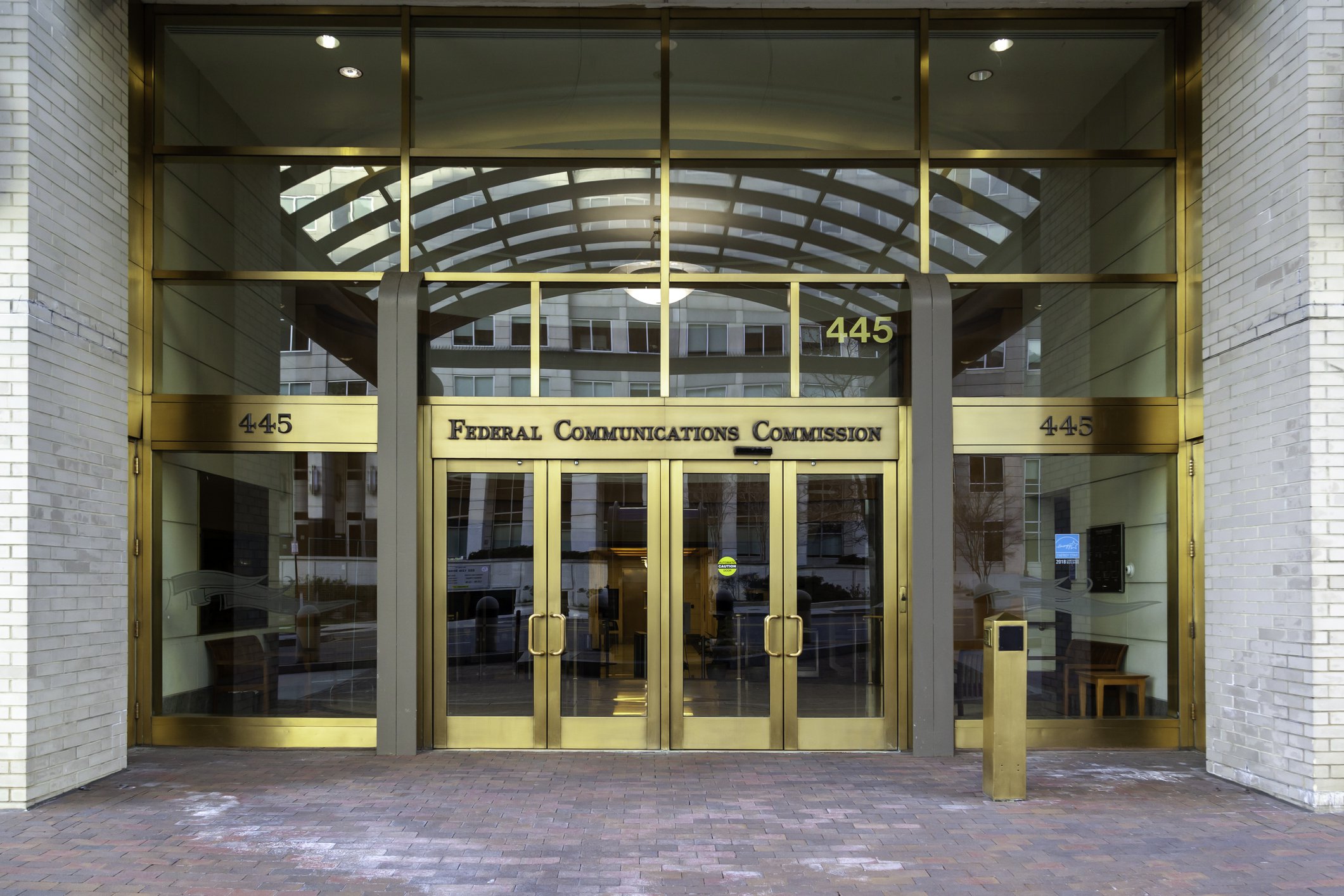
The Federal Communications Commission (FCC) has said it's prepared for the government's shutdown.
FCC Chair Brendan Carr made the comments during SCTE Expo this week, as the US government has shutdown after the Republican Party and Democrats failed to agree on a way forward on a spending bill.
The government officially shutdown as the clock turned midnight on Wednesday 1, October.
It means that some US government services could come to a halt.
Such a shutdown is set to impact the FCC, which is an independent government agency.
"We have been hard at work the last couple of weeks preparing for a possible government shutdown,” said Carr on Monday (September 29). “Hopefully, we don't get there, but we do have a game plan in place.”
The Commission outlined a plan earlier this year on how a potential shutdown would impact the agency.
As such, 88 percent of the FCC's 1,476 staff will be furloughed and sent home, while around 171 employees will continue working.
That said, during this shutdown, the role of the FCC is limited, as noted back in March when it revealed its plan should a shutdown occur.
"Generally, during such a shutdown, all FCC activities will cease other than those immediately necessary for the protection of life or property, performing other excepted activities, or those funded through a source other than lapsed appropriations," said the FCC in its plan.
Prior to the shutdown, President Trump warned the Democrats that his administration could impose "irreversible" actions, including the mass firings of federal workers, should the Democrats allow government funding to expire at midnight.
It's not known how long the shutdown will last for. The last shutdown, which took place during the Trump administration's first term, between December 2018 and January 2019, lasted for 35 days.

Carr slams China's AI efforts
During his talk at SCTE Expo this week, Carr also notably took aim at China, as he urged the US to win the AI race.
"The US leads the world in AI," claims Carr, who compared its efforts so far to the country's transition from 3G mobile networks to 4G.
"On the one hand, you've got China, which very clearly wants to dominate in AI, but their AI is deeply embedded with ideological bias," he added.
"For instance, if you ask DeepSeek what happened in Tiananmen Square, they’ll tell you it was a wonderful day. If you ask them how the Uyghurs are doing, they say they're doing wonderful. It's a total misperception of reality. We want AI to develop free from that type of bias. That means the US has to lead the way, and that means for us, our networks have to continue to be the best, the most high-performance out there."
His comments came after the FCC denied applications from four “bad labs” the agency linked to the Chinese government, building on 11 previous denials sent out last month.
Discussing the labs in more detail at SCTE Expo, Carr noted that the process around labs in the US had been "pretty basic," as reported by SDx Central.
"But increasingly, we're asking these labs to engage in national security reviews,” Carr said. “And up to recently, we never had any check in place to make sure that the labs themselves are trustworthy actors that can be trusted to make this decision. After all, we don't want a Huawei spy gear box coming in the country with a sort of white label certification. So we've now adopted rules for the first time that let the FCC kick out of our system, not to recognize labs that are beholden to the government of China.”
It wasn't just China that Carr went after. He also pointed a dig at Europe, claiming that "heavy-handed regulation of the Internet" has driven a significant decline in speeds across the continent.







Comments