
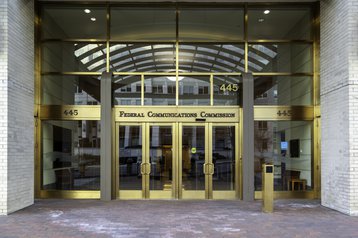
The Federal Communications Commission (FCC) has adopted rules that will accelerate the retirement of copper networks in the US.
As part of these new rules, the regulator has reduced regulatory requirements around network transitions, while granting companies the authority to "grandfather legacy voice services, lower-speed data telecommunications services, and interconnected Voice over IP (VoIP) service provisioned over copper wire."
According to the FCC, this will free up tens of billions of dollars each year for carriers to instead focus on their respective high-speed network rollouts.
The changes come after the FCC announced plans earlier this month to hold a vote to speed up the removal of copper networks. US telcos, including AT&T, have pushed to retire and remove legacy copper from their networks in favor of deploying fiber.
The regulator said the removal of some regulatory hurdles will allow providers to invest in modernizing their networks. Until now, carriers have had to ask for permission to retire copper lines in communities across the country.
"Today’s decision marks an important step in accelerating America’s transition to modern, high-speed networks. For too long, outdated rules and regulations have forced providers to maintain aging copper infrastructure and to keep consumers on broken, antiquated networks. And this has come at a high cost," said Brendan Carr, chairman, FCC.
"One provider alone reports that they have been spending about $6 billion a year maintaining copper lines for a dwindling number of consumers. That changes today. This vote effectively frees up those billions of dollars so that Americans can benefit from an upgrade to the types of modern, high-speed networks that they want and need."
The FCC said that critical services such as 911 will be unaffected by the order, while the regulator warns that the rules favor federal authority over state and local requirements.
Carriers have welcomed the order, while the Wireless Infrastructure Association (WIA) has also praised the FCC for streamlining the network modernization process.
"Replacing outdated rules that hinder efficient investment in modern communications networks is common sense. WIA applauds the FCC’s action today because it will empower network operators to invest more effectively in next‑generation broadband technologies, including wireless, to ensure Americans nationwide benefit from modern, future‑ready connectivity," said Patrick Halley, CEO, Wireless Infrastructure Association.
FCC wants to bring telco call center jobs back to the US
On the same day, the FCC also proposed plans to onshore telecom call center jobs that have previously been offshored.
The regulator said it has voted to launch a new proceeding looking into the use of offshore call centers. As part of this, the FCC will seek comment on proposals that would encourage businesses to bring call center jobs back to the country.
The FCC said that such plans would require call takers to be proficient in American Standard English.
In the FCC's announcement, it states that the decision to outsource call center jobs abroad has led to customers experiencing worse customer service, blaming communication barriers.
On top of this, the FCC notes that these foreign call centers "have also contributed to the onslaught of robocalls facing American households and businesses, while bad actors have leveraged the training and infrastructure of legitimate call centers to defraud Americans.
"Too often, foreign call centers have meant confusing service, delayed support, and even security risks," added Carr. "In many cases, scammers get trained at legitimate call centers and either access your data illegally or take their training to a foreign robocall operation. It is time for this offshoring to end."
Charter Communications, which is set to complete a $34.5 billion merger with Cox, has already said it will onshore call center jobs. AT&T, Verizon, and T-Mobile all currently use offshore call centers.





Comments