
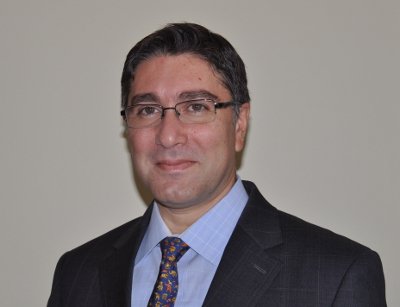

From small to large, colo to banking, Total Site Solutions has built all kinds of data centers. FOCUS caught up with the company’s director of engineering Ramzi Namek, who shared his thoughts on data center design and the evolution of the industry’s thinking about infrastructure strategy. Total Site Solutions provides a full range of data center services, from planning and design through building and maintenance.
DatacenterDynamics FOCUS: How many data centers have you built and for what types of customers?
Ramzi Namek: We have designed and built hundreds of data centers for colocation, healthcare, government, banking, education and other commercial clients. Many of our facilities fall in the 5-12MW range but we have installed systems as small as 100kW and as large as 25MW.
DCDF: How have data center design requirements changed over the past five years?
RN: We see two influences: First is the acceptance of the modular and scalable data center. The days of building 100,000 sq ft of white space fully powered and cooled from day one are over. New data center designs have to accommodate IT growth between the first day of IT rack deployment and up to a future full build-out of the space. Modular designs are now a norm in our industry.
The second is energy efficiency with PUE (Power Useage Effectiveness) being the most popular proxy. We see many RFPs that have a target PUE that the engineer must design towards.
DCDF: Do you see more demand for full-service data center design-build solutions than there was a few years ago?
RN: Yes, there seems to be a trend to hand off the responsibility to one party responsible to coordinate all the conceptual growth modelling, basis of design, construction documents and construction management.
The advantages include:
• Integrated design and construction approach
• Clear advantage with accelerated schedule and established completion date
• Superior approach for highly specialized projects
• Principal relationship is teaming/partnership
• Owner risk passed to D/B firm
• Owner holds one contract. D/B firm responsible for design and construction
• Constructability knowledge apparent throughout all phases
• No owner liability for cost
• Less owner responsibility and staff
• Budget certainty at outset of project and refined throughout design process
• Reduced cost for procuring major/long lead equipment
DCDF: How often do companies come to you asking for a LEED-certified data center?
RN: While all our customers are concerned with energy efficiency, only two out of every ten clients inquire about LEED certification. They often ask about LEED design concepts without the actual certification process.
DCDF: What are customers usually driven by when they want a LEED or an Energy Star certification for their facility?
RN: Energy efficiency and sustainability of their site as well as the marketing potential.
DCDF: What simple steps can the enterprise take to reduce its data center capital/operational spend?
• Seal opening, blanking panels throughout the white space
• Raise supply temperatures if SLA’s permit (air and water)
• De-energize humidification and reheat within the data center
• Network all the CRAC units and install web based building automation system
• Automate cooling tower blowdown
DCDF: Do many customers enquire about modular data center solutions?
RN: The number of inquiries seems to be rising since 2010. This year we had three.
DCDF: What is the average time to market for new data center customers today?
RN: Nine months seems to be the golden spot for most data center customers.
DCDF: Do you see enterprises shifting more towards outsourcing data center management?
RN: Not as much as the media is touting. We still see clients in the 1-3MW range needing to build their own data centers and manage their own data and processes.
DCDF: Do you see a lot of interest in Data Center Infrastructure Management (DCIM) software?
RN: There is a lot of interest but not much commitment once the client sees the price of implementation and long-term operational commitment.
This Q&A first appeared in FOCUS magazine. To register for FOCUS digital editions, click here.