

Facebook’s entire data center infrastructure consumed 509m kWh of energy in 2011, resulting in 207,000 metric tons of carbon dioxide emitted into the planet’s atmosphere, the company said in the first report on its energy use and carbon footprint it released Wednesday.
The world’s leading social-networking company admitted that its 2011 commitment to power at least 25% of its operations with renewable energy by 2015 was going to be difficult to follow through on, and it did not have a clear plan for achieving that goal.
“We know this is going to be a stretch for us, and we’re still figuring out exactly what it will take to get there,” Facebook said in a statement.
The overall energy mix fueling all of Facebook’s operations, including data centers, office space and other facilities, is 27% coal, 23% renewable, 17% natural gas, 13% nuclear and 20% “uncategorized”. The last category on the list is for energy utilities would not disclose generation-fuel information on.
It is changing the energy mix in the immediate term that is the challenge for a company growing as quickly as Facebook is. It needs to expand operations rapidly to support the number of new users constantly signing on and the amount of content those users share through the network.
“The reality is that as a fast-growing company our carbon footprint and energy mix may get worse before they get better,” Facebook said. The company expects to start seeing a steady increase in the proportion of renewable energy sources powering its data centers after it launches its most recent data center in Lulea, Sweden in 2014.
Lulea’s power generation is dominated by hydroelectric sources.
One reason Facebook will not be able to get its data centers off coal overnight is its existing footprint.
The two data centers it owns and operates are served by utilities that do a lot of coal-fired generation. But the energy these two data centers consume is a very small part of the overall energy consumption of its data center footprint.
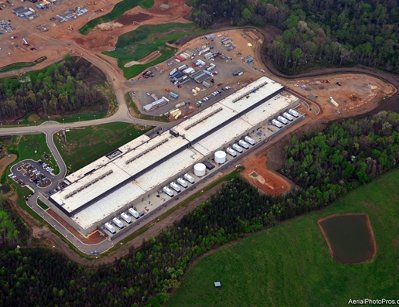
In addition to the two data centers it owns (Prineville, Oregon, and Forest City, North Carolina), Facebook leases two more from wholesale data center providers (one on the west coast of the US and one on the east coast).
The west coast facility used 227m kWh in 2011, and the east coast one used 205m kWh. Facebook’s Prineville data center used 71m kWh during the year and its Forest City site consumed 6m kWh.
This is another reason the company is finding it difficult to change its energy mix so quickly. While it controls its energy destiny at sites it owns and operates, it is the wholesale data center providers that purchase power from utilities for facilities where Facebook is a tenant.
And, at least today, it seems companies like Facebook need to be near densely populated metropolitan areas, where their end users are concentrated, because of latency concerns, as Amazon’s James Hamilton recently pointed out.
While the company can buy a lot of cheap land in a rural area in Sweden and get access to cheap hydroelectric power there, the financials are different in the Silicon Valley, where both land and power are comparatively expensive and where leasing wholesale data center space has been the model of choice for large Internet companies. Wholesalers can deliver new data center capacity a lot quicker and often cheaper than most end users can.
Before Lulea comes online, Facebook plans to continue optimizing its operations for energy efficiency, while growing the amount of renewable energy sources powering its data centers through location decisions, engagement with environmentalist organizations and industry advocates for clean energy, and including a renewable-energy component in every data center project the company undertakes.