
Latvian police have arrested seven people after carrying out a raid over an alleged SIM card scam in the country.
In an announcement last week, as first reported by ITPro, Europol stated that a law enforcement operation called "SIMCartel" led to the arrest of five cybercriminals of Latvian nationality on October 10, 2025, before a further two suspects were arrested later.
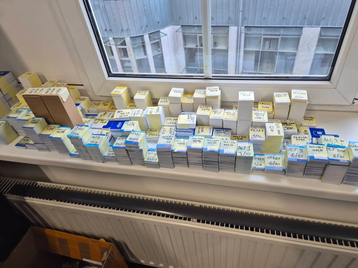
In total, Europol said five servers were taken down, while 1,200 SIM box devices, alongside 40,000 active SIM cards, were seized.
The clampdown was carried out by investigators from Austria, Estonia, Finland, and Latvia, along with colleagues at Europol and Eurojust.
According to Europol, the operation has linked more than 1,700 individual cyber fraud cases in Austria and 1,500 in Latvia, with a "total loss of several million euros."
The financial loss in Austria amounts to around €4.5 million ($5.25m), and around €420,000 ($490,000) in Latvia.
"The criminal network and its infrastructure were technically highly sophisticated and enabled perpetrators around the world to use this SIM-box service to conduct a wide range of telecommunications-related cybercrimes, as well as other crimes," said Interpol.
"The online service created by the criminal network offered telephone numbers registered to people from over 80 countries for use in criminal activities. It allowed perpetrators to set up fake accounts for social media and communication platforms, which were subsequently used in cybercrimes while obscuring the perpetrators’ true identity and location."
As part of the 'action day' carried out during the operation, 26 searches were conducted in total, eventually leading to the first five arrests. Police identified and shut down two websites (gogetsms.com and apisim.com). The websites had been offering illegal services.
Beyond this, €431,000 ($501,000) worth of money has been frozen in the suspects' bank accounts, along with $333,000 worth of crypto accounts. Four luxury vehicles have also been seized.
Europol suggests that there's still more to come, noting that more than 49 million online accounts were created on the basis of the illegal service provided by suspects
"The true scale of this network is still being uncovered. The damage caused by the renters of the telephone numbers to their victims amounts to several million euros," said Europol.

The criminal network is accused of enabling its clients to commit a multitude of serious crimes, without masking the perpetrators’ identities.
This included 'phishing’ and ‘smishing,' which helped criminals access victims’ e-mail and banking accounts.
However, Europol reports that some of the offences were severe, including "fraud, extortion, migrant smuggling and the distribution of child sexual abuse material."
A number of different scams were deployed by the criminals, including a "daughter-son" scam where the criminals would contact victims via WhatsApp, posing as a daughter or son and claiming to have a new phone number. From there, they would try to panic the victim and demand payments, usually in the four-figure range.
Others would use the SIM card service to commit fraud on second-hand marketplaces, while some perpetrators posed as fake police officers to extort money from victims.
Sites taken offline straight away
Europol stated that they wasted no time in taking the websites offline, doing so during the action day on October 10.
"The now-dismantled criminal network undertook great efforts to provide its criminal clients with the requested service. This included the professional design and appearance of its website, which was taken offline by law enforcement during the action day," said Europol, which stated the operation was "sophisticated" and "efficient."
The group also set up technically sophisticated infrastructure that enabled it to offer telephone numbers registered to people from more than 80 countries for use in criminal activities.
Europol added that one of the main suspects behind this criminal structure had already been under investigation in Estonia for arson and extortion. None of the suspects' identities has been revealed.
Europol explained that it planned an action day along with Latvian police and Eurojust, while investigators and police from Austria, Estonia, and Finland supported the operation.
"Europol deployed specialists to Riga to aid Latvian authorities, and both agencies provided financial support for technical equipment, travel, and translation costs," stated Europol.
"During the operation, the technical infrastructure of the organized criminal network was dismantled in collaboration between Europol and the Shadowserver Foundation. A splash page was displayed on the landing page of the criminal service, which had been offering crime-as-a-service using foreign phone numbers for smishing and phishing."







Comments