
Ericsson reported a mixed third quarter for the financial year, as the vendor bemoaned a "flat" RAN market.
However, CEO Börje Ekholm, earmarked potential opportunities to drive 5G Standalone growth into the 6G era.
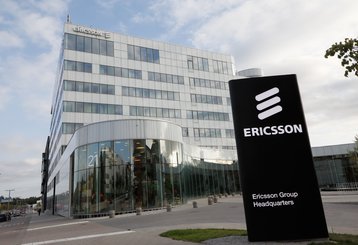
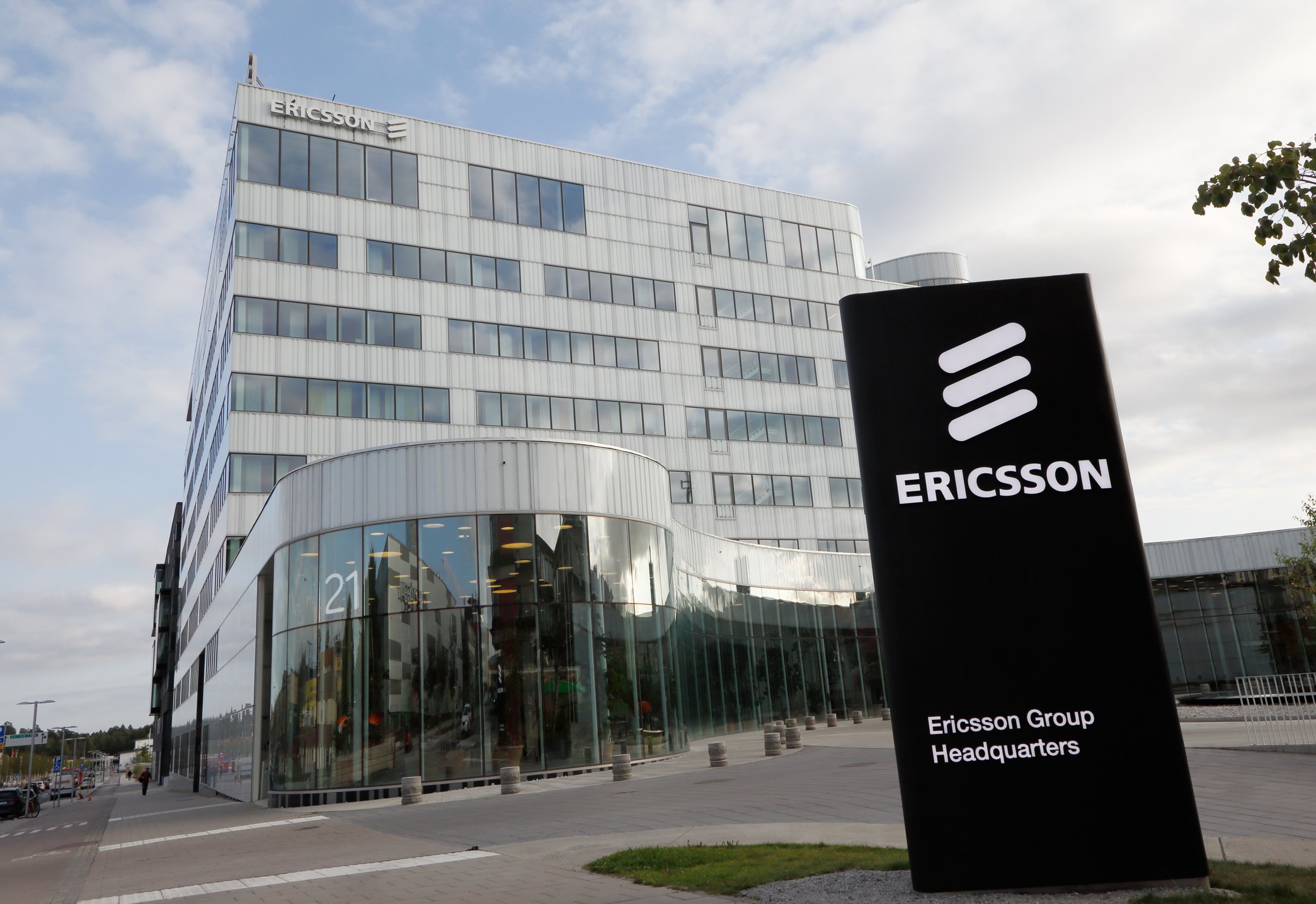
For the quarter, Ericsson reported that revenues dropped by nine percent year-on-year (YoY) to 56.2 billion Swedish kronor ($5.9 billion).
This was in part down to foreign-exchange movements, while Ericsson noted that organic decline was just two percent.
“In Q3, we established margins at a new long-term level following strong operational execution over the past few years. Cloud software and services sales grew nine percent, driven by strong growth in core networks," said Ekholm.
Ekholm said in an earnings call that Ericsson recorded revenue growth in three out of four markets, but a decline in the Americas, where sales were down eight percent.
The CEO was keen to highlight success in Europe, including the company's $1.3bn contract win with VodafoneThree in the UK.
"We also increased our share in the UK with an eight-year partnership with VodafoneThree to supply a significant majority of the mobile networks and the entire core network," said Ekholm, who also highlighted growth in India and Japan.
He didn't seem to be too concerned about Ericsson's performance in the Americas, instead pointing to the fact that the vendor's Q3 performance was solid last year.
RAN market slowdown continues, headcount down by 6,000
During the call, Ekholm stated that Ericsson anticipates the RAN market will remain "flat" going into the final quarter.
This is something that the vendor has factored in for the future.
"And when it comes going forward, as we talk about, we live in a flat RAN market, that is our, so to say, planning assumption, and that means that we need to continuously fight with inflation coming through, including salary increases. And just to keep flat, we'll require further activities on the cost side," said Lars Sandstrom, senior VP, head of group function finance and CFO, Ericsson.
In the call, Ericsson revealed that headcount at the vendor has dropped by 6,000 people. The vendor confirmed in 2023 that it was cutting 8,500 jobs.
Ekholm said that the company has leveraged "new ways of working," which has included the use of AI. "As we plan for a flattish market also going forward, we will continue our cost measures on levels similar to what we've done in the past years," he said.
He noted that Ericsson will continue to push developments around AI, including through its Open RAN portfolio.
5G Standalone growth opportunity
If the market remains flat as Ekholm and Ericsson have suggested, then one area for growth that the vendor has its eye on is around 5G Standalone (5G SA).
When 5G networks first launched in the latter part of 2018 and early 2019, these networks relied on 4G core, essentially meaning the 5G was Non Standalone (5G NSA).
However, in the last few years, carriers across the world have shifted their 5G networks to use 5G core instead. A recent example of this includes AT&T in the US, which deployed its nationwide 5G SA network last week.
Ekholm sees an opportunity for the vendor to capitalize on further deployments.
"The one thing which is important is, of course, that the operators need to migrate to 5G Standalone, and that is something that's going to be required in order to deliver the capabilities of 5G," he said.
"So when we have spoken in the past of low latency, very high bandwidth, network slices, et cetera, it's all depending on being on 5G SA. And so far, it's, I would say, one in five operators or one in five networks maybe are upgraded."
As he notes, in order for 5G use cases, such as network slicing, to be fulfilled, a transition to 5G SA is required.
According to Ekholm, this will also make the transition to 6G easier for operators. Touching on 6G briefly, he said he expects the technology to be here commercially before 2030.
"6G will be much more AI cloud dependent. But actually, what you do in 5G SA paves the way into that world. And what's more important, by being in 5G SA, you create the monetization models that will be needed in 6G as well," adds Ekholm.

More in Investment / M&A / Financing
-

-
-

Episode 2027 Trends and Outlooks: Europe
Comments