
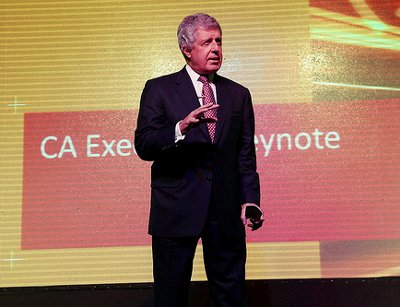

CA Technologies has launched the latest version of its data center infrastructure management software called DCIM 4.0 at the DatacenterDynamics conference in San Francisco Tuesday.
The release features improvements to IT-asset discovery and monitoring capabilities, better data capture, predictive 3D modeling of the thermal environment, improved identification of available rack space and tighter integration with EnergyWise, the protocol Cisco’s networking devices use to communicate their energy-usage data.
Peter Gilbert, VP at CA ecoSoftware, said the company’s DCIM solutions overall are different from the rest of the DCIM market, where companies usually take one or both of two angles in their approaches to DCIM: facilities (power and cooling) angle and capacity and inventory management.
CA takes things further in helping manage not only data center capacity and assets but also services the data center is providing to the business, Gilbert explained. CA is “tying the way you manage the infrastructure back to IT management processes and business services that you’re providing.”
One of the biggest additions in the fourth release of CA’s DCIM software is predictive 3D visualization for “what-if?” scenarios. The previous version could generate a report of available space which the managers would have to analyze to determine where to put a new piece of equipment or implement other changes.
DCIM 4.0 will generate a 3D visualization of the data center’s thermal conditions and show where adding a new server, for example, will be most appropriate give the cooling capacity in different areas of the data center floor.
The new release also provides suggestions for best places to put new equipment.
The software collects power, cooling and humidity data from the data center floor in real time. This data is aggregated by a Gateway device, which uses a number of common protocols used by both IT and facilities systems.
Determination for equipment placement, user-defined or industry-standard metrics and other analysis of the incoming data is done by CA’s Calculation engine, which analyzes the data continuously. The engine makes decisions based on both real-time and historical data.