
A data center and greenhouse project could be coming to Alberta, Canada.
Wetaskiwin is a city in the county of Wetaskiwin, Alberta. The city is 70km (43 miles) south of the provincial capital, Edmonton.
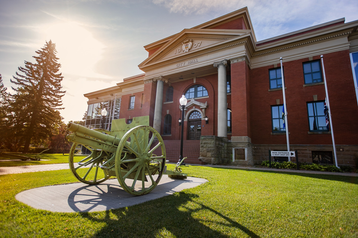
News of a potential data center project in the area surfaced this month when Wetaskiwin Mayor Joe Branco announced during his state of the city address that an international consortium was interested in building a renewable energy data center and greenhouse complex.
Branco said the consortium’s initial investment could total between CA$350 million and CA$500 million (US$252m to US$361m).
Full details on the project haven’t been shared. The mystery consortium is reportedly in negotiations with a local landowner to purchase the target property, and could start construction in 2027 or 2028.
“Wetaskiwin has an opportunity to set a new standard for the use of artificial intelligence in municipal operations,” said Branco. “With the right approach, the city can improve services, strengthen infrastructure planning, and operate more efficiently using real-time systems.”
This week, the city of Wetaskiwin published a “clarification” on the potential data center development, saying it was aware of preliminary discussions about the project but no formal application has been submitted to the city, and any project would “need to go through established regulatory and municipal approval processes.”
“The city of Wetaskiwin welcomes interest from companies looking to invest in our community,” it said. “The city remains committed to transparent, responsible economic development and will keep our community informed through official city channels as things progress.”
The county of Wetaskiwin is set to discuss changing land use bylaws to allow for data centers. A county notice says a public hearing will be held on April 7 to add data centers as a term in its land use ordinances.
Canada’s core data center markets have traditionally centered around Montreal, Toronto, and Vancouver.
Alberta, however, is becoming a hotspot for data center activity due to its temperate climate, available land, and abundant power, with dozens of large-scale projects proposed in the region in the last 18 months that could total gigawatts of capacity. Alberta is a major producer of natural gas, and many of these projects are looking to tap into gas pipelines as a power source.
According to research conducted by DC Byte, the country has a development pipeline of almost 9GW, compared to some 1.4GW of live capacity.




Comments