

Diversified Agency Services (DAS), one of the world’s largest marketing and advertising agency conglomerates, is consolidating and refreshing its entire data center infrastructure. The Omnicom Group-owned agency network is consolidating its massive IT resources, taking colocation space in two US locations, which are each very different from the other.
Replicating across the continent
Casey Whiteley, director of data center operations at DAS, says the project’s vision is to have two data centers on the opposite US coasts set up in an active-active configuration.
“We will host applications across both data centers with real-time replication between both for the applications that support that,” he says. Applications that do not need this level of redundancy will be hosted as close to their end users as possible to reduce latency.
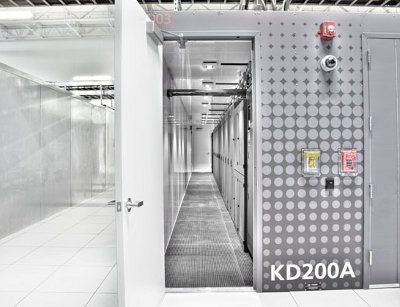
DAS chose IO’s data center in Phoenix, Arizona, for its west coast site and a QTS data center in Atlanta, Georgia, on the east coast. At IO, its IT gear lives in data center modules called IO Anywhere and its set-up at QTS is a traditional raised-floor deployment.
“We consciously chose two completely diverse colocation models with two different vendors in two different locations with two different power strategies as part of our business continuity plan,” Whiteley says.
IT systems at both sites, however, will be as close to identical as possible, except network. DAS has chosen Cisco’s networking gear to go into its Phoenix location while HP will be providing network switches in Atlanta. HP is providing all of DAS’s servers. The team also chose HP’s 3Par system for its multi-tenant storage set-up in Phoenix and in Atlanta. At the initial roll-out the system has 500 terabytes of capacity, but can be scaled up to 1.7 petabytes.
The reason for choosing different network vendors at the two locations is the same reason DAS chose two different colocation models: reliability. If a piece of equipment by one vendor fails at one location, chances are the other vendor’s gear at the redundant site will stay up, Whiteley explains.
The infrastructure will be virtualized on VMware ESX, with the goal of 75% virtualization. Consolidated Data Services (CDS) – a centralized IT-services division DAS created as part of this project – is setting up a private cloud to provide applications as a service. The CDS team is planning to implement a chargeback mechanism for its services, although what that mechanism is going to look like was still being worked out at the time this article was written.
Whiteley says that as it consolidates, CDS is refreshing its systems, installing brand-new hardware. He says everything the company had been using at its previous primary data center in Dallas was due for attrition. Some of the hardware was up to five years old.
Because most of the equipment for the project was purchased in August 2011, however, CDS is not installing any ProLiant Gen8 servers (HP’s latest line of ProLiants). “As we start to expand within those data centers we’ll be looking at Gen8 equipment,” Whiteley says.
Eliminating the patchwork
CDS is planning to get rid of its old 12,500 sq ft Dallas data center by the end of the year. “Come December of this year, we’re going to tear this data center down and convert it into office space,” Whiteley says.
While it has been the primary data center, IT infrastructure of some 165 agencies under DAS’s wing extends far beyond this one Dallas facility, which serves about 18,000 US employees. All agencies have some form of an IT space, ranging from a data closet through a fully-fledged data center with dedicated HVAC and security systems. “They all have their own data centers and their own infrastructure that they have been maintaining for years,” says Whiteley. “They weren’t part of the data center in Dallas.”
The project started in 2010, when all DAS agencies were tasked with completing an inventory of their IT resources. It turned out there were between 20 and 35 fully fledged data centers, complete with raised floor, HVAC and fire suppression systems, in addition to data closets. CDS was created in 2012 and tasked with replacing this patchwork with a private cloud that would host all aspects of the company’s agencies’ IT infrastructure.
The major applications being moved from Dallas to Phoenix and Atlanta are Microsoft Exchange and Microsoft Dynamics, in addition to a multitude of custom-built applications agencies have built to provide services to their customers, such as web hosting and analytical data feeds. Part of the process is identifying redundant applications and consolidating those. While leaving many of the custom applications alone, the goal is to identify as many applications as possible that can be shared across the company.
Location is key but there’s more
DAS is currently taking four IO Anywhere modules in Phoenix, with total power capacity of 300kW. At the QTS data center in Atlanta, it is leasing a 2,500 sq ft suite.
The main reason DAS chose IO in Phoenix was location. Whiteley says the area does not see many natural disasters, while the IO facility has access to most of the major network carriers’ infrastructure. The company was also sold on IO’s unorthodox modular approach to building out co-location space. DAS is using dedicated IT and cooling modules at IO, sharing power distribution modules with other customers in the facility.
Rick Crutchley, SVP of national DCaaS (Data Center as a Service) sales at IO, says the short timeframes within which IO can deliver capacity was also a deciding factor.
“Being able to essentially… drop a module in place when they need it and not build like a traditional data center build” was attractive for DAS, he explains.
John Stanley, senior analyst for data center technologies and eco-efficient IT at 451 Research, says the fact that the co-location space is built out in modules itself does not usually matter that much to a co-location customer. IO manufactures the modules at a factory and delivers them to the data center site as needed, which helps the provider itself deliver space faster and cheaper, but this does not change the fundamental questions a co-location customer is concerned with.
“What’s the SLA (service level agreement)?” Stanley asks. “What are the capabilities of the space in terms of resiliency, its redundancy and things like that? What’s the price point?” The fact that DAS chose QTS in Atlanta for its second site illustrates that while IO’s modular model is attractive, it is not the main deciding factor.
Whiteley declined to say how much DAS was paying per 1kW to IO, but said the pricing was competitive with the rest of the market.
The Atlanta site was also chosen because of low probability of natural disaster and proximity to many of the company’s customers, Whiteley says. DAS agencies tend to be concentrated on each of the two coasts, including San Francisco and San Diego on the west coast and Connecticut, New York and Atlanta to the east.
QTS declined to comment for this article, citing customer privacy requirements.
The cost of power
Besides modular-versus-traditional, a major difference between DAS’s two new sites is the way each of the providers charges for its services. QTS uses a traditional co-location model, charging the customer for space used, electrical circuits allocated and network bandwidth provided. IO’s price is quoted as dollar amount per 1kW, which includes the cost of the rest. IO delivers the space and cooling capacity necessary for whatever power the customer contracts for.
This is not the only way IO charges its customers. It has a lot of traditional data center space in Phoenix in addition to modular space. Customers using the traditional space pay per circuit and per cabinet. Customers in dedicated modules and customers that occupy half of a module can use the per-kW pricing model.
Stanley says the per-kW model is really the way of the future. It is cheap for data center companies to provide space, he says. What is not cheap are power and cooling capacity. The days of colos charging per square foot are numbered, he says: “I hope that’s going away.”
Modular itself is not enough
While the days of charging for colo space used are ending, Stanley says the days of traditional, non-modular data center space are not. Prefabrication and reduction of on-site labor and one-off engineering costs are really where the value of prefabricated modular data centers lies. “This is something you can accomplish in any form factor,” he explains.
He says there are still a lot of traditionally minded data center users out there who are not sold on the modular idea. “There are still a lot of customers who don’t fully understand the range of what prefab modular is,” Stanley says. By ‘prefab’ he means pre-fabricated in a factory and shipped to the data center site.
Upon hearing the word ‘modular’ in reference to data centers, many of these traditionalists still think these are the same shipping containers that saw a lot of hype in 2007 and that seemed to have been invented by the large IT vendors to sell their IT gear in large quantities at once.
The new generation of modular is much more than that, offering a variety of form factors. “IO is a great example of that,” Stanley says. “They’ve got these modules but they’re not shaped like ISO containers.”
‘Snowflakes’ will stick around
George Slessman predicted at a recent industry conference that the last custom-designed data center – or ‘snowflake’ as he refers to them – would be built before May 2013. That is because the modular model just makes a lot more business sense. Stanley disagrees. “Prefab modular will continue to gain mind share in the industry,” he says. “To say prefab modular is going to gain 100% mind share in the industry is overly aggressive.”
DAS is certainly not standardizing on modular.
A version of this article first appeared in the 24th issue of the DatacenterDynamics FOCUS magazine. Visit the FOCUS registration page for a free subscription.