
US operator DartPoints is expanding its data center portfolio across South Carolina, Indiana, and Ohio.
The company announced the first phase of expansion, following the equity investment from Nova Infrastructure.
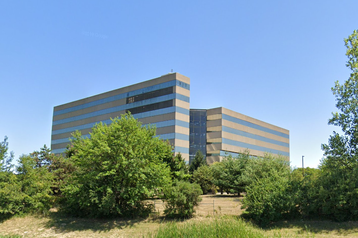
Construction is underway, and phased deployments are scheduled through early 2027, adding 25MW of additional utility capacity.
The expansion includes purpose-built data centers or expansions in Greenville and Columbia, South Carolina; Columbus, Indiana; and Cincinnati, Ohio.
Each site will feature infrastructure capable of supporting up to 120kW per rack and able to support air cooling, direct-to-chip liquid cooling, or hybrid systems tailored to specific workload needs.
“Our vision of delivering AI-ready environments in the next ring of US markets is now becoming a reality through our partnership with Nova Infrastructure,” said Scott Willis, CEO of DartPoints. “By building closer to the people, applications, and data that drive modern business, we’re enabling enterprises to meet the demands of latency-sensitive, distributed workloads. This expansion proves we’re putting our capital to work to deliver on that promise.”
“Local relationships are at the heart of what we do,” added Willis. “In markets like Greenville and Columbus, we’re not just expanding our campuses, we’re helping catalyze digital economies and creating opportunity from the ground up.”
Founded in 2012, DartPoints serves more than 900 enterprise customers, including major universities, hospital systems, and Fortune 500 companies, from 11 data centers in 10 markets across South Carolina, North Carolina, Ohio, Indiana, and Louisiana.
Investment fund Nova Infrastructure purchased a majority stake in the company earlier this year. Orion Infrastructure Capital also became a minority stakeholder, while previous owner, Astra, retained a minority holding.
“We’re designing for tomorrow’s workloads, whether that’s training models, running inference, or scaling secure, multi-tenant cloud services,” said Brad Alexander, CTO of DartPoints.
“Our sites will incorporate hybrid cooling technologies to support higher densities, while preserving the flexibility that multi-tenant environments require.”





Comments