
US tower company Crown Castle is optimistic that carrier spectrum deployment will offer long-term value opportunities for the company.
It comes as Crown Castle reported its third-quarter earnings for the year, the first quarter in which Christian Hillabrant has been in place as president and CEO after joining last month.
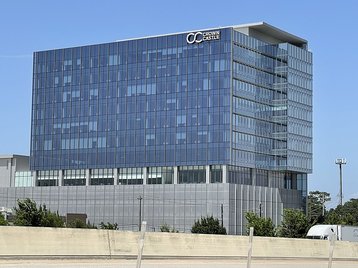
For the quarter, Crown Castle reported that site rental revenues were down five percent year on year to $1.01 billion, while net income for the quarter was $323 million compared to $303m for the third quarter last year.
The company did, however, report that organic tower revenue growth jumped 5.2 percent for the quarter, totaling $52m for Q3, which excluded Sprint cancellations.
Hillabrant, who joined from Vantage Towers, confirmed that Crown Castle has increased its full-year outlook. As such, the company has raised site rental revenues by $10m, adjusted EBITDA by $30m, and AFFO by $40m.
The company previously increased its site rental revenues during its Q2 earnings.
"We delivered strong operational and financial results in the third quarter and are increasing full year 2025 outlook as we continue to find opportunities to operate more efficiently," said Hillabrant, who expects Crown Castle to close the sale of its small cells and fiber businesses to EQT Active Core Infrastructure and Zayo Group, respectively, for a combined $8.5 billion.
"I am excited by Crown Castle’s opportunity to create long-term attractive risk-adjusted returns as the only US-focused, large publicly traded tower company after closing the fiber business sale transaction, which we continue to believe will close in the first half of 2026."
Hillabrant added that the company will continue pushing itself as a standalone tower company. Crown Castle operates more than 40,000 towers across the US.
Spectrum deployments will drive further growth
Hillabrant stated that the tower operator is bullish about future growth opportunities, as more spectrum is allocated to the Big 3 carriers.
The Big 3 have been unable to bid for spectrum at auction since March 2023, when Congress allowed the Federal Communications Commission (FCC) authority to lapse for the first time ever. The FCC has since regained its ability to authorize spectrum auctions.
"As data demand continues to grow, it will require operators to expand network capacity by both deploying new sites and adding new spectrum bands to existing sites," said Hillabrant during the company's earnings call.
He foresees a similar opportunity for tower operators to monetize the spectrum deployments in the same way these companies did when carriers first launched 5G.
"Looking ahead, the FCC has said it plans to auction at least 800 megahertz of additional spectrum beginning in 2027. As we saw during the early stages of the 5G deployment cycle, spectrum acquisitions by well-capitalized carriers tend to create significant opportunities for tower operators," he added.
The company also touched on EchoStar's proposed spectrum sales, which include a $23bn deal with AT&T, noting that it doesn't expect to lose out too much from EchoStar's sale, stating that Dish represents about 5 percent of its revenues on the tower side.



Comments