
CoreWeave has officially surpassed 1GW of data center capacity, the company's CEO, Mike Intrator, revealed during its Q1 FY2026 earnings call.
This comprises almost 50 data center locations, and the company remains "firmly on track" to exceed its target of 1.7GW by the end of 2026.

Intrator noted that, for now, this capacity is entirely from long-term leases with data center partners - none of which hold more than 17 percent of the company's capacity- but that the company plans to accelerate its "development of self-build sites, which will provide us with greater operational control and long-term financial upside." Its first self-built site is expected to come online later this year.
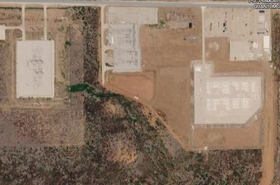
The specific data center has not been named, but CoreWeave is known to be converting a lab and manufacturing building at the Northeast Science & Technology Center (NEST) in Kenilworth, New Jersey, into a data center, and in June 2025 filed to build a 180MW facility in Indiana.
With a greater emphasis on self-building, the company is targeting to bring the majority of its 3.5GW of contracted power online by the end of 2027, and as much as 8GW by 2030. In the last quarter alone, CoreWEave contracted 400MW of power capacity.
In terms of revenue, CoreWeave brought in $2.1 billion this quarter, up 112 percent Year-on-Year (YoY) and 32 percent from the quarter prior.
CEO Intrator noted that the company is seeing an increasing diversification from its customers - with enterprises now contracting capacity - while also experiencing growth from its "core customers" of hyperscalers and AI labs. Among the new contracts referenced was the $6bn AI cloud capacity deal with quantitative trading firm Jane Street secured in April.
Notably, these contracts continue to span all of the company's chips on offer. CoreWeave signed initial Nvidia Vera Rubin deals this quarter, but is "continuing to monetize our Blackwell, Hopper, and Ampere capacity," with Intrator noting that the average pricing across all the chips has increased from the previous quarter, and is "largely sold out for near-term capacity."
In addition, while the execs said that they do not necessarily know for sure how the compute is being used, looking at the power profiles, they now estimate that more than 50 percent is going toward inferencing workloads.
Intrator said that many of their contracts see customers "come in and they buy the most bleeding-edge infrastructure. Then they use that infrastructure to train, and then they take that infrastructure and move it down to the inference load, which is probably less compute-intensive," thus driving interest in the older generations of GPUs.
"We are sold out in our H100s. We are sold out in our A100s. We are seeing price appreciation as more inference is coming in and making demands upon that compute workloads in order to be able to deliver to their clients," he added.
Customer bookings for Q1 surpassed $40 billion, and its contracted revenue backlog is now $99.4bn, up 50 percent on the previous quarter and an increase of nearly four times YoY. CFO Nitin Agrawal told analysts that of this backlog, 36 percent will be recognized in the next two years, and 75 percent in the next four.
Annualized revenue run rate is estimated to reach $18-19bn for the year, and $30 billion in 2027.
Operating expenses for the quarter were $2.2bn, and capex was $6.8 billion. With this, the company has seen its margins continue to drop - which an analyst on the call noted was the fifth consecutive decrease.
Nitin explained that the "margin dynamic" for CoreWeave is timing-based, not economic.
"We get receipts of powered shell, and start incurring lease expenses as well as power expenses, and we start depreciating server and other data center equipment during the fit-out process. That process takes us about one to two months. During that period, we are recognizing costs, but no revenue." With that in mind, the company has tripled its power capacity over the last year, and it isn't until around month three of deployments that the company is "typically generating revenue and the contribution margins stabilize."
CEO Intrator added that this is further impacted as "we're installing such massive amounts of infrastructure relative to our installed capacity. If you think of it as we're running 50MW and we add 300MW in a quarter, the impact on gross margin is going to be enormous. On the other hand, when you're running 2,000MW, and you add 50MW, it's not going to have as material an impact on your gross margin."
Naturally, the issue of increasing component prices and lack of availability was touched on, but Intrator said that this is nothing new for the company, which has been built in "an environment that has always been a bit challenged on the supply chain side."
For its current contracts, CoreWeave has secured the necessary components, and from a price perspective, CoreWeave "build[s] our contracts to incorporate the cost of all of the components that are necessary to deliver infrastructure. By and large, we are insulated from the price inflation on some of the components because we include that in our pricing that we ultimately bring to clients."
CoreWeave is now anticipating capex for Q2 of between $7-8 billion, and for the full year to be in the realm of $31-35bn.
On the financing side, CoreWeave's leadership team was keen to draw attention to the $8.5bn loan secured in March 2026. According to Intrator, it is "the first ever investment grade delayed draw term loan backed by HPC infrastructure, achieving an A-minus equivalent rating from Moody's, Fitch, and DBRS."
CFO Agrawal added that the loan had an implied rate of less than six percent, which is "a meaningful decrease from our previous facilities."
"We also introduced an ABS-style draw feature, unlocking an additional $1 billion of drawable capital upon stabilization of the underlying contract. We can use this incremental capital to help fund future investments for the delivery of subsequent capacity at a highly attractive price ... Overall, we expect this approach to become the new norm for CoreWeave when financing the build-out of capacity for investment-grade customers."
In total, the company has secured $20 billion in debt and equity year to date, and has no debt maturities until 2029 other than self-amortizing contract-backed debt and OEM vendor financing. Interest expense for the quarter was $536 million, up from $264 million in Q1 of 2025.
Other key metrics for the quarter include an adjusted EBITDA of $1.2bn, up from $606m the year prior, and with a margin of 56 percent. Operating income was $21 million compared to $163 million in Q1 of 2025, and net loss for Q1 was $740 million compared to a net loss of $315 million in Q1 of 2022.
At the time of writing, CoreWeave shares are down 6.62 percent.





Comments