
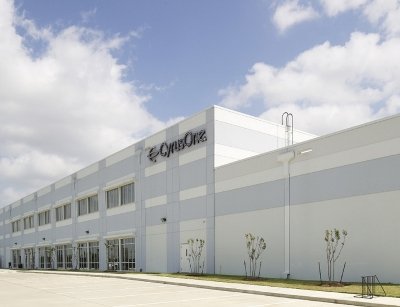

US telco Cincinnati Bell is planning to offer a portion of the shares of its data center business CyrusOne for sale on an undisclosed future date. The company did not disclose the size of the portion being prepared for IPO or how long it intends to hold on to shares that remain after the sale.
Cincinnati Bell is also considering turning CyrusOne into a Real Estate Investment Trust (REIT) – a publicly traded entity that specializes in real-estate investments. These structures are considered to receive special tax treatment and have highly liquid methods of real-estate investment.
The mother company said it wants to use proceeds from the sale to pay down debt “to amounts appropriate for the remaining telecommunications company.”
Cincinnati Bell announced it was considering spinning off its data center unit in February but did not specify what type of a spin-off was in the works.
The telco bought CyrusOne in June 2010 and turned the Texas colocation company into a national and later an international-scale player. Today, CyrusOne has presence in Texas, Arizona, Ohio, Chicago and London.
As of the end of the first quarter, CyrusOne’s 800,000 sq ft data center footprint was 85% occupied. The company added 43,000 sq ft of data center space during the quarter and sold 15,000 sq ft.
CyrusOne’s colocation revenue grew 21% year over year in the first quarter, contributing US$53m to Cincinnati Bell’s overall revenue of $363m for the quarter. Total company revenue for the quarter was up $2m year over year.
Not only did CyrusOne become an international company after the acquisition, it also diversified its product offerings, turning from a pure-play colocation company into one with a focus on interconnection.
In a quarterly-earnings call Thursday, its executives said the current strategy was to focus on interconnection offerings at CyrusOne’s Texas data centers.
The company, whose focus has traditionally been on enterprise clients in the state’s oil-and-gas industry, is now hoping to attract major content and internet clients by being interconnection-strong in major Texas metros, where it can offer the eyeballs of about 20m people.