
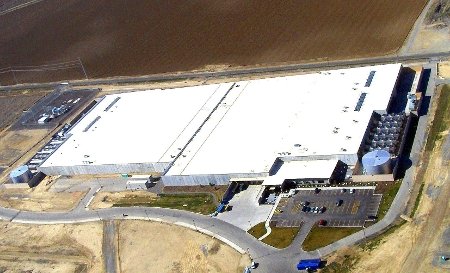

An independent Washington State board has ruled against a challenge to a permit issued to Microsoft to install generators at its data center site in Quincy, a small town, The Seattle Times reported.
Microsoft got the permit from the Department of Ecology (DOE) in 2010, but in December of that year, the town’s former mayor Patty Martin challenged the permit, saying the DOE made a mistake in letting Microsoft go forward with its plans.
Martin, who has been actively campaigning against generator permits issued in Quincy, was concerned with diesel exhaust emissions. According to past reports, Martin and her group believed the DOE’s mistake was not requiring Microsoft to use filters on its backup generators.
The former mayor has appealed generator permits granted to several other data center operators in Quincy.
This week, the Pollution Control Hearings Board – which has the power to nullify a DOE permit – ruled that there were no errors in DOE’s judgment when it issued the permit to Microsoft.
“The board find that the emissions estimates used to support the health-risk analysis and the analysis of compliance with emissions standards were validly derived,” the board’s ruling on Microsoft read, according to the Times.
While refusing to overturn Microsoft’s permit, the board required the ecology department to change the permit to include additional limits and rules on the use of generators.
There are at least six data centers that have either already been built or are in the works in Quincy, whose population is 6,200. There are more than 150 diesel generators in the town, according to the Sierra Club.
Major end users like Dell, Yahoo! and Intuit have data centers there. Wholesale data center providers in town are Sabey and Vantage.
Martin has appealed generator permits granted to Yahoo!, Dell and Sabey.
Microsoft has made efforts to have a mutually beneficial relationship with the city.
In October 2011, the company announced that it had leased a water-treatment plant to Quincy at a symbolic rate of US$10 per year. The company did this so that the city would not have to invest into a new treatment plant in exchange for a lower water rate.